Free on-site estimatesServing Austin, Dallas, Houston, Fort Worth & San AntonioContact our fence specialists

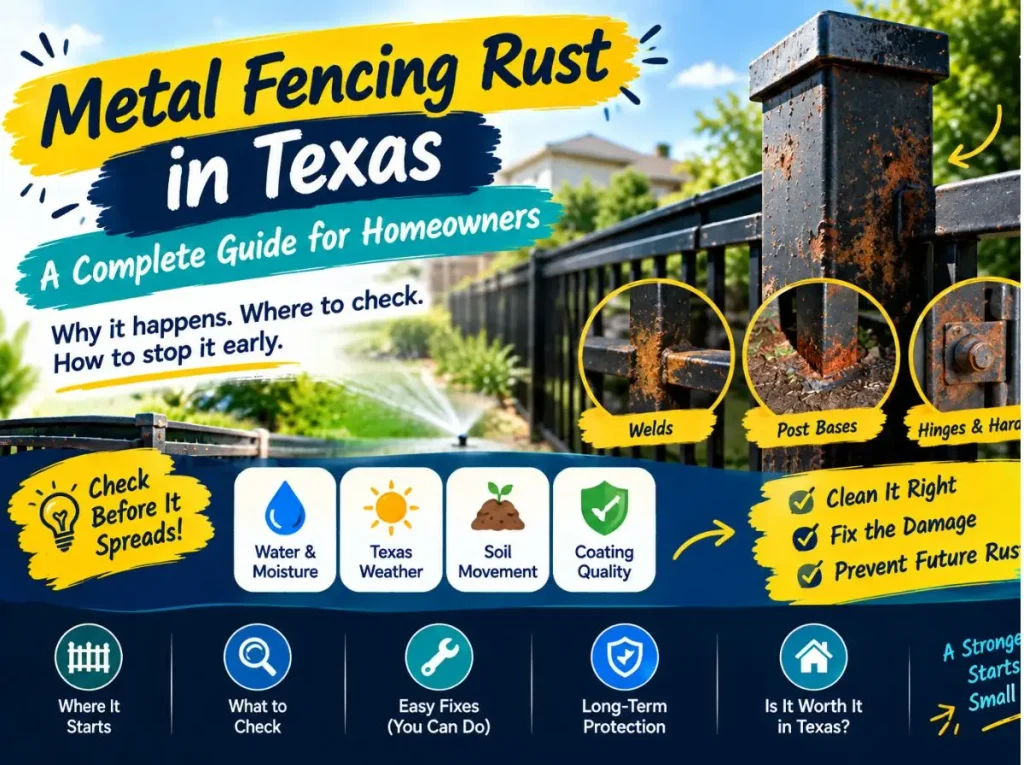
Metal fencing rust comes down to one simple thing: bare steel that stays wet. Texas yards make that easy. Between the sprinklers, the pool and a few hard summer storms, your fence probably sees water most weeks of the year. The good news is that rust isn’t guaranteed. A fence that was prepped, coated and installed the right way can go for decades.
When rust does show up, it almost always starts in the same handful of places. This guide covers where those are, how to catch metal fencing rust while it’s still a small job, and when to stop fiddling with it and call someone.
How Steel and Iron Fences Rust
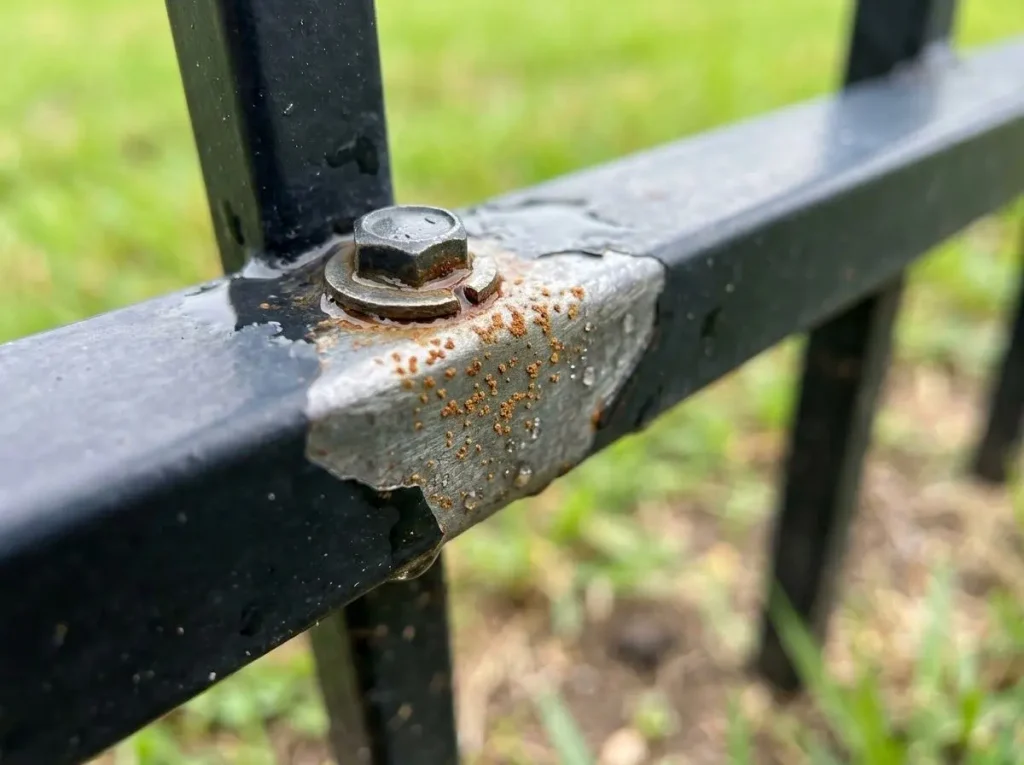
Rust needs two ingredients, water and air, and a fence has both all day long. People blame rain, but rain is only part of the story. A sprinkler hitting the bottom rail does the same damage. So does a splash from the pool, soggy soil, or a shrub that’s been leaning on the metal all summer.
The paint or coating is the only thing standing between that moisture and the steel, which means rust shows up wherever the coating gives out first. That’s usually a weld, a bolt, the base of a post or a gate hinge. Any spot where a mower or trimmer has taken a chip out of the finish counts too.
Metal Fencing Rust Causes in Texas Yards
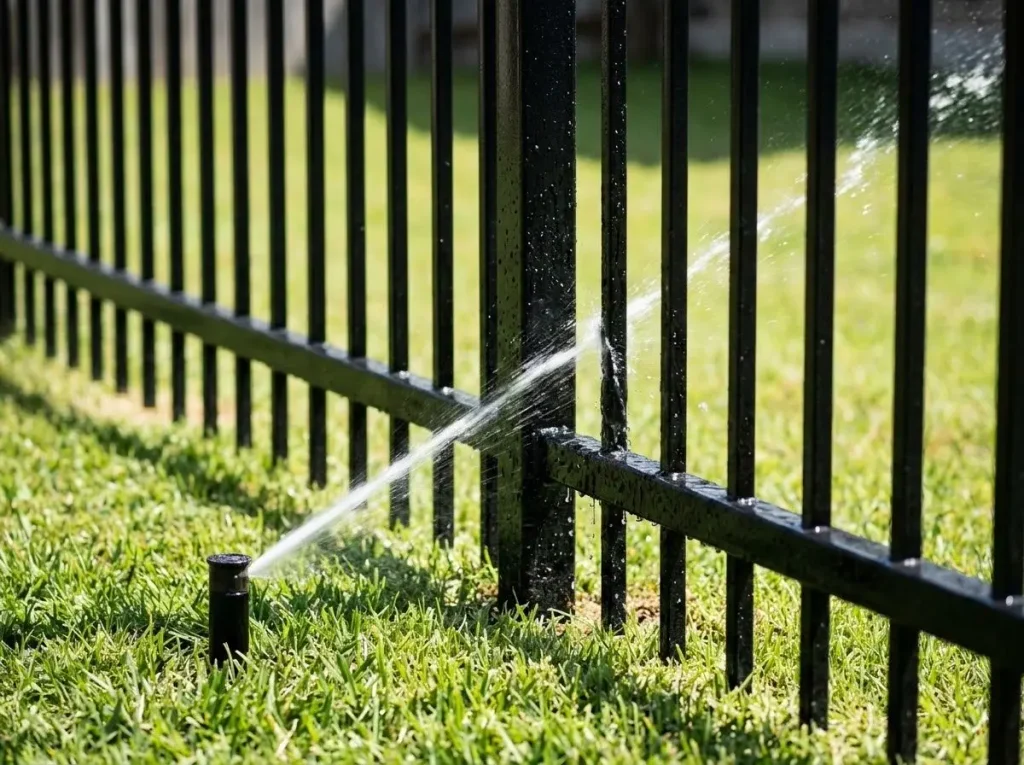
Up in North Texas, metal fencing rust has more to do with your sprinklers than with the weather. Builders in Collin County say irrigation is the most common cause of early rust they see. Think about it for a second. A sprinkler head soaks the same bottom rail twice a day, every day, for months. Even a good coating gives up eventually.
Then there’s the dirt. Black clay swells up when it rains and shrinks back in a drought, and expansive clays like this are common across Texas. All that pushing and pulling can slowly move your posts out of line. Concrete footings set at the right depth keep a fence steady. Without them, the fence shifts, the welds take the strain, and the finish starts to scrape. That’s the opening rust needs. Whether you live in Dallas, Fort Worth, Plano or McKinney, a small scratch costs almost nothing to fix now. Leave it, and it grows.
Painted, Powder Coated or Galvanized Fences
Two black fences can look exactly the same from the street. What’s under the paint is another story. A custom steel fence built in a shop is often cleaned, primed and painted. A factory-made ornamental one might be galvanized, powder coated, or finished in several layers. Paint and powder coat act like a shield between the steel and the moisture. Galvanizing goes a step further by adding zinc, and zinc keeps protecting the steel even if a small spot gets damaged. The American Galvanizers Association explains how that works.
The finish matters more than almost anything else. Cheap big-box panels with a thin spray coat can start rusting within a few summers. And here’s something that surprises people: most wrought iron fencing sold today is really ornamental steel, so the coating is doing most of the work. When you’re getting quotes, ask exactly how the metal was prepped and protected. Painted, powder coated and galvanized aren’t the same thing.
Why Welds and Build Quality Matter
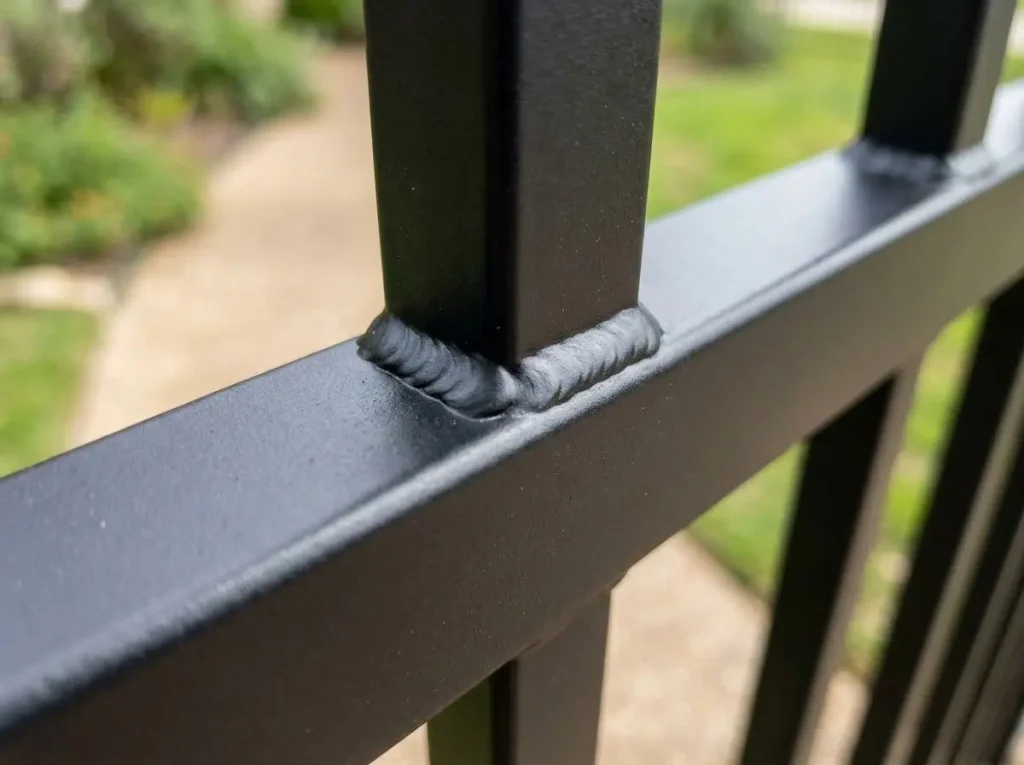
Talk to anyone who builds fences and the conversation turns to welds pretty quickly. A bad weld can leave tiny voids where two pieces meet, and moisture finds its way in. Welds done in the field under a hot sun also don’t match the ones made on a bench in a shop. Add steel that isn’t powder coated or put together with proper hardware, and the fence stops looking good faster than you’d expect. So ask who built it and where. A clean shop weld under a solid coating will do more against metal fencing rust than any touch-up you do later.
Does Aluminum Fencing Rust?
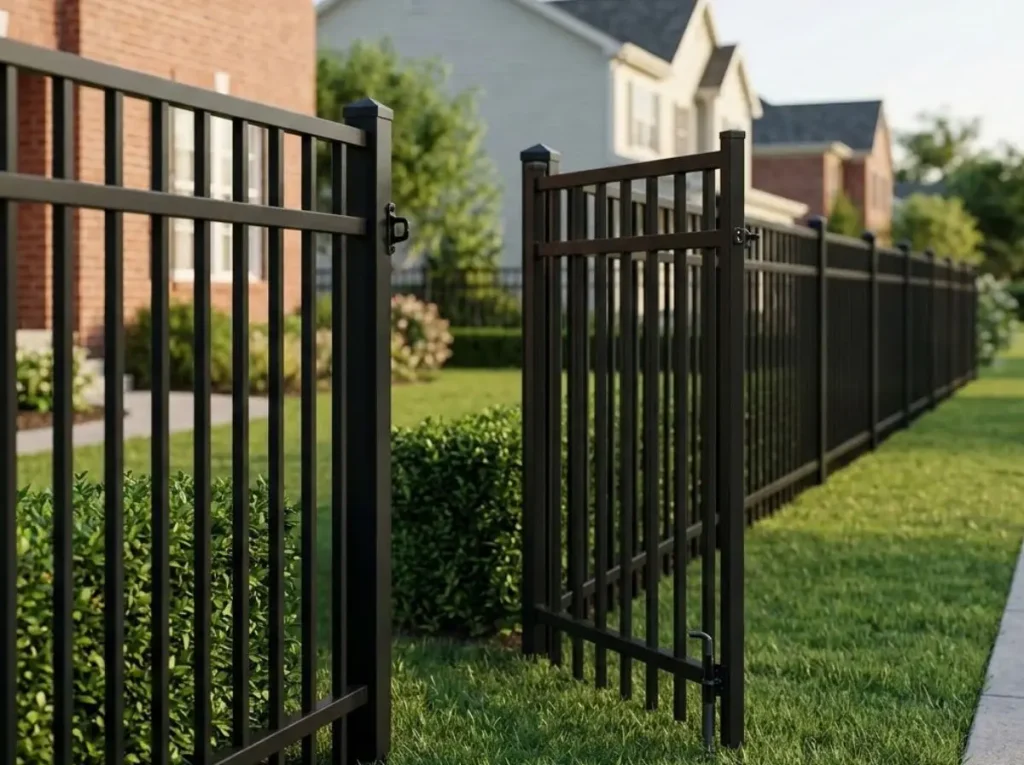
Aluminum is a different story. It doesn’t rust like steel. Bare aluminum can still oxidize, but you get a whitish film that washes off. It’s often cheaper than steel, but the finish is where it struggles. Powder coating can wear thin, and touch-ups don’t always hold. If you’re torn between aluminum and iron, ask about wall thickness, how the pieces are joined and what finish goes on top. Thicker pickets and extra rails help a lot.
Where to Check Your Fence for Rust
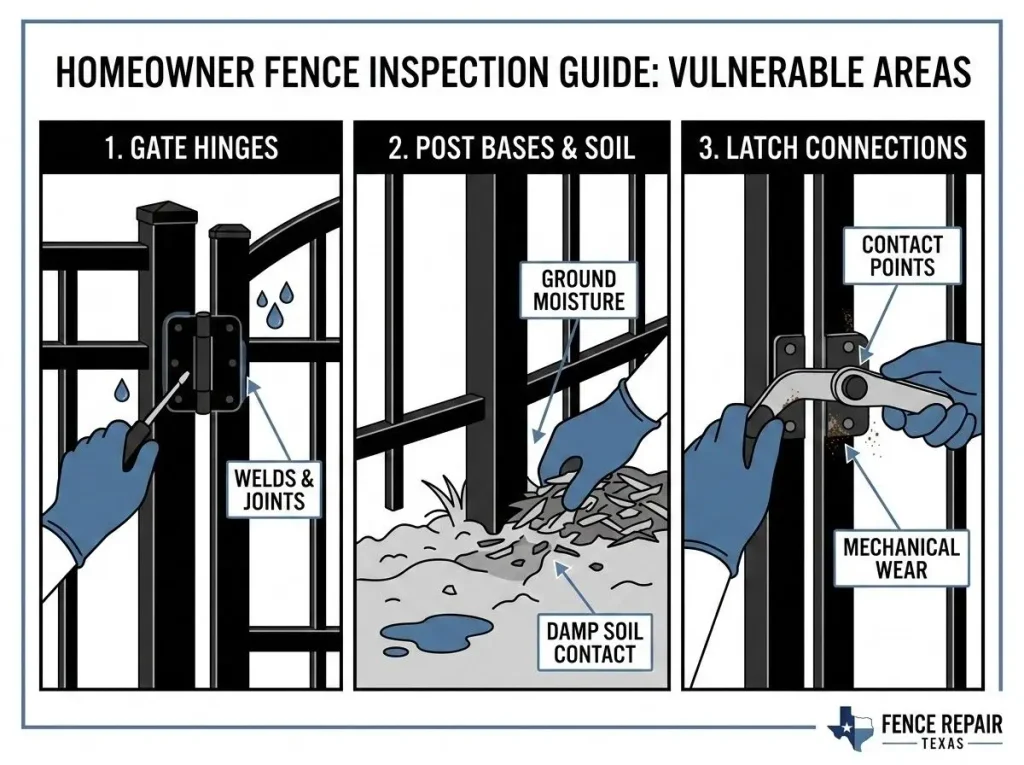
Walk your fence line twice a year. Do it again after any bad storm. Late summer is a good time, since the fence has just been through months of sun, sprinklers and wind. Check the welded joints first, plus any decorative details where water likes to sit.
Then get down low and look at the posts right where they meet the ground, especially if soil or mulch is touching the metal. Spend extra time near sprinklers, pools, downspouts and thick plants. Spotting metal fencing rust early is cheap. Fixing it late is not.
Don’t forget the gates. They’re heavy and they move all day, so they wear out first. Look at the hinges, the latch, the frame and the spot where the gate meets the post. A gate that sags will scrape its own finish off and tug on the welds while it’s at it. If yours drags or won’t latch, take a look at gate repair.
How to Clean a Metal Fence Safely
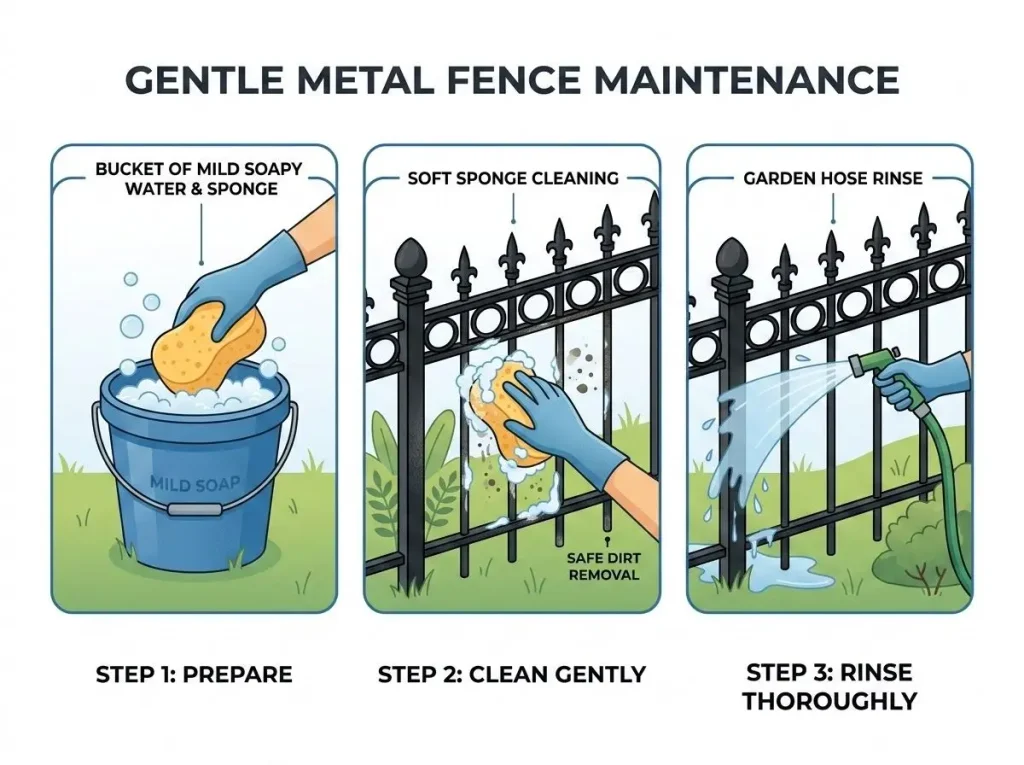
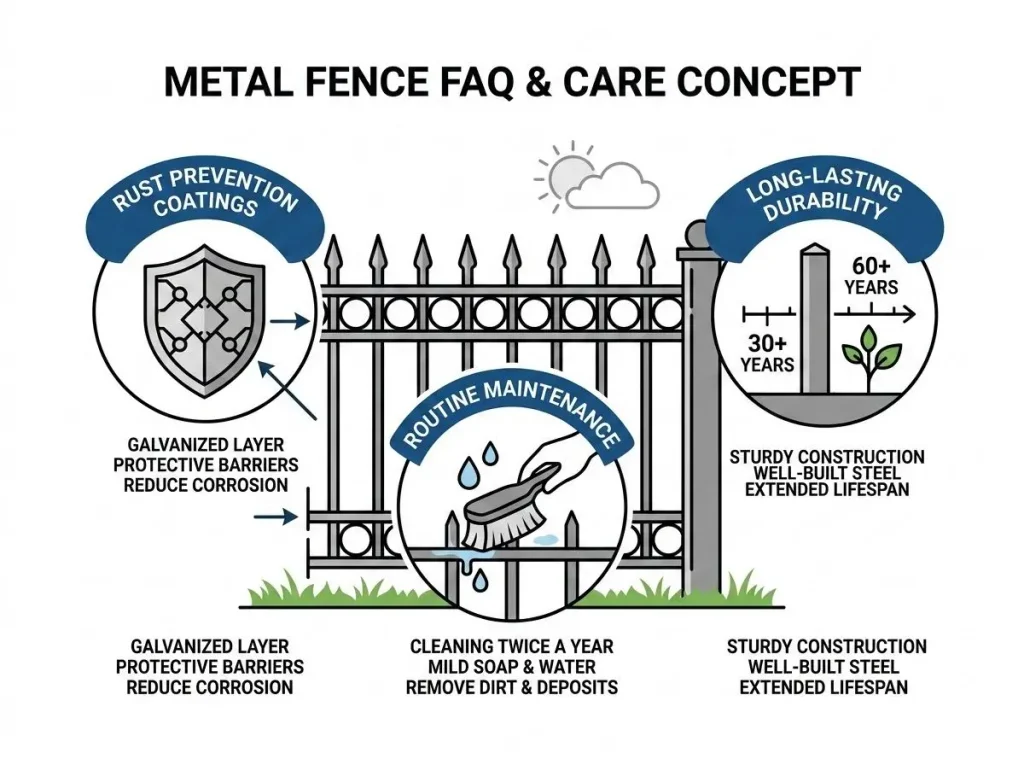
You don’t need anything fancy to clean a metal fence. Mild soap, water and a soft cloth or non-abrasive brush will do it, and twice a year is plenty for many yards. Dirt, lawn chemicals, bird droppings and the mineral crust left by sprinklers all hold moisture against the finish, so washing them off keeps rust away and helps you spot early metal fencing rust.
Rinse off the soap and let everything dry. While you’re out there, look for bubbling paint, orange stains, cracks, loose fasteners or rough patches. Any of those can mean rust is building underneath.
How to Fix Scratches and Surface Rust
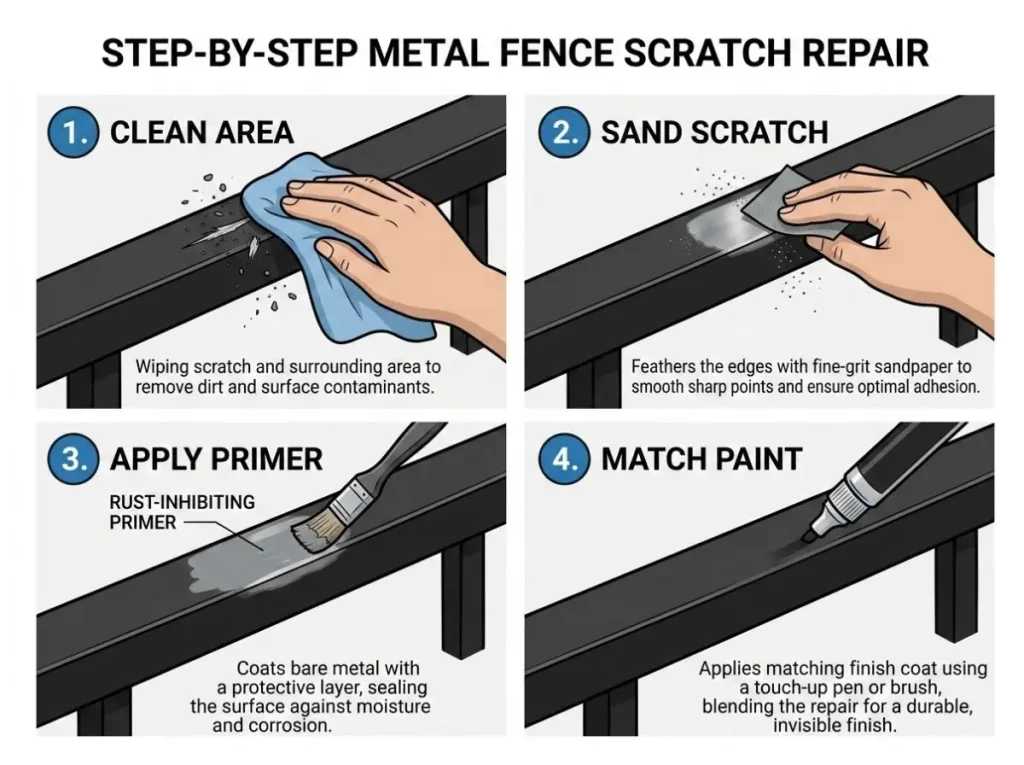
A small scratch or a spot of surface rust is an easy weekend fix, as long as the metal around it is still solid. Clean the spot and let it dry. Sand the rust off, then brush on a rust-inhibiting primer and a paint that works with your existing finish. Doing this early is how you stop metal fencing rust from spreading.
One rule: never paint over loose rust, dirt or flaking paint. The new coat might look fine for a month or two, but it won’t stick. Read the manufacturer’s care instructions and warranty first, because the wrong product can change how the fence looks and might affect your coverage. This powder coating care guide also covers gentle cleaning and when touch-up paint can repair minor damage. And if the finish starts to fade or turn chalky, builders often suggest recoating every 3 to 5 years.
Prevent Metal Fencing Rust by Cutting Moisture
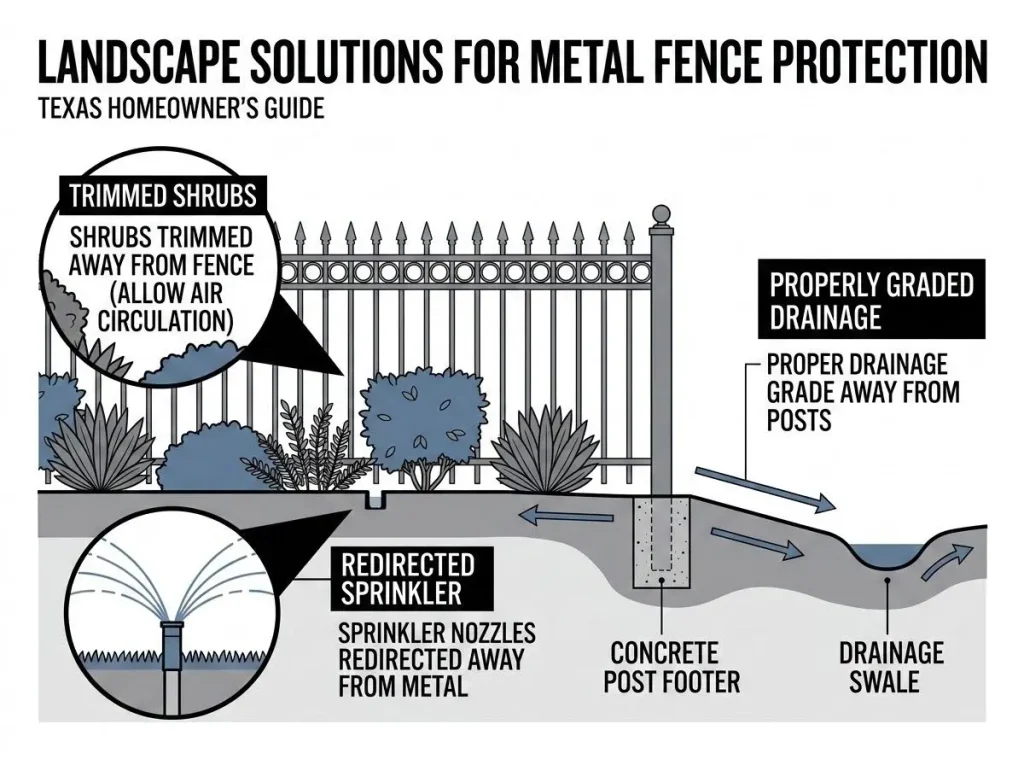
Keeping water off the fence is the biggest thing you can do to slow metal fencing rust, and most of it is simple yard work. Turn your sprinkler heads toward the lawn instead of the rails. Pull soil and mulch back from steel posts. Trim plants so air can move around the metal. If a low spot keeps the post bases wet after rain, fix the drainage there. Got a pool fence? Give it a quick rinse when treated water splashes on it.
If you own a commercial property, add irrigation, cleaning chemicals and runoff from nearby pavement to your watch list. None of this will stop humidity or a big storm, of course. It just cuts the constant dampness that wears a coating down.
Is Metal Fencing Worth It in Texas?
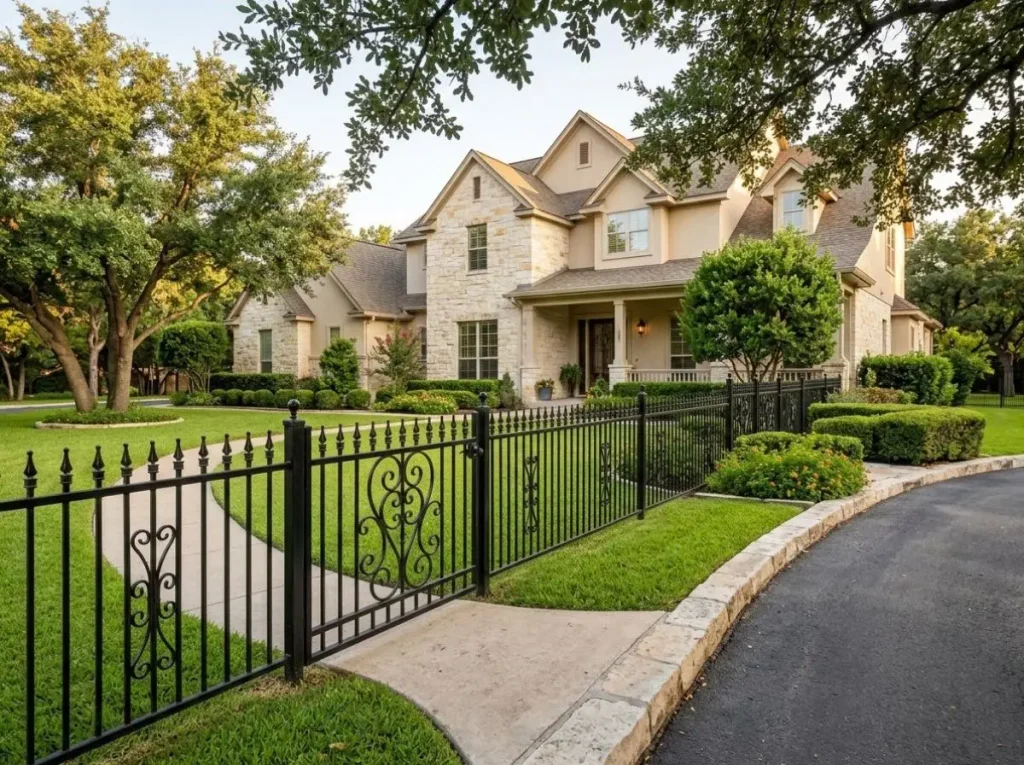
For most Texas homeowners who don’t mind a little upkeep, metal fencing is worth it. It costs more up front, and one Texas pricing guide says wrought iron can roughly double the starting price of wood. The payoff comes later. A Fort Worth fence company puts powder-coated wrought iron at 50 to 100 years, galvanized chain link at 20 to 50, and wood at 15 to 20
Wood isn’t a lost cause, either. Cedar is the most common wood fence in Fort Worth, and sealing it on schedule helps it last toward the top of that range. It really comes down to how much upkeep you’re willing to do and how often you want to deal with repairs. Handle it right, and metal fencing rust stays a small, fixable problem.
When Metal Fencing Rust Needs a Professional
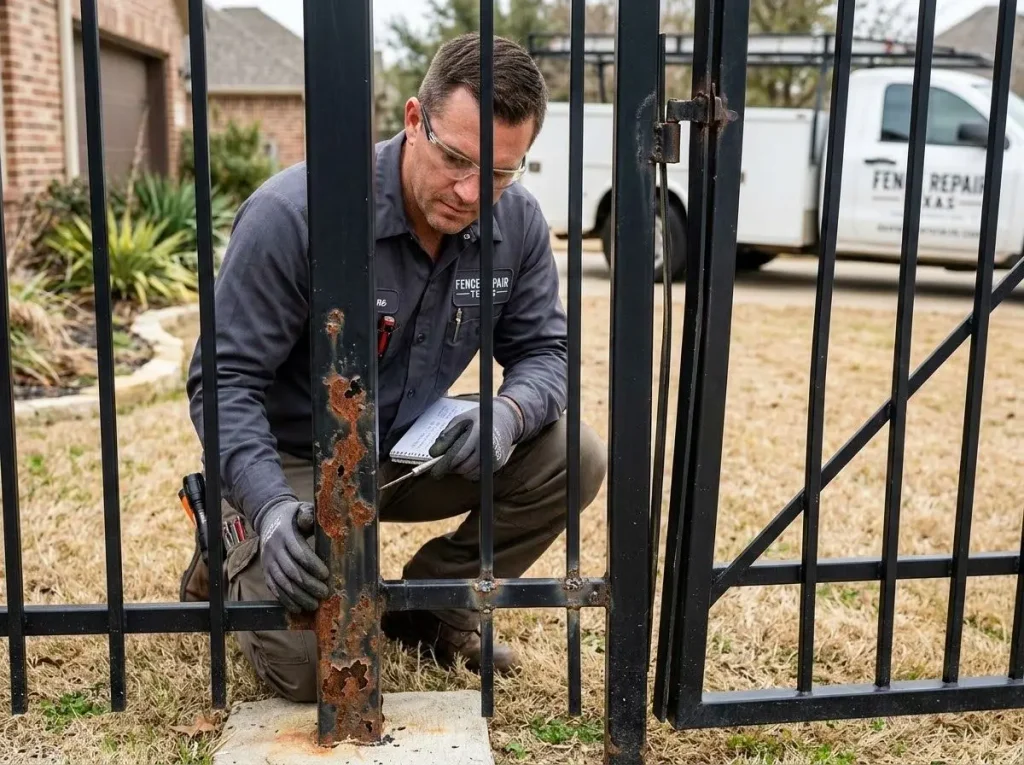
Surface color and structural damage are two different things, and that’s the line to watch. If you see flaking metal, deep pitting, holes, weak welds, loose pickets or wobbly posts, get someone out to look. Same goes for a gate that won’t open and latch right anymore. Where the damage sits decides the fix. Our guide on when to repair or replace a fence walks through the decision
Not sure whether your metal fencing rust is cosmetic or structural? Fence Repair Texas can look at the rust damage, gate alignment, coating failure and other structural problems, then tell you whether repair or replacement makes sense. Call (972) 525-9448 to talk it through, or see our fence repair services and request a free estimate.
Frequently Asked Questions
Can powder coated metal fencing rust?
It can. Powder coating is a barrier, and barriers get breached. A scratch, a hard hit, poor prep or an aging coating can expose the steel underneath, and rust starts there. Check damaged spots when you see them, repair them early, and follow the manufacturer’s instructions for your finish.
Do wrought iron fences rust in Texas?
They can, but you can prevent most of it. Sprinkler spray, pool splash and scratched paint are the usual culprits. Keep those spots dry, touch up scratches fast and repaint when the finish fades. Stay on top of that and a good iron fence can go for decades without much drama.
How often should I check for metal fencing rust?
Plan on twice a year, plus after a big storm or anything that smacks the fence, like a mower or a fallen branch. Walk the whole line and look at welds, post bases, gates and fasteners. Spend extra time anywhere sprinklers hit or water sits. Late summer is a good time to do it.
Can I paint over rust on an iron fence?
Not directly. Paint can’t grip flaking rust, so the problem keeps spreading underneath and the fix won’t last. Clean and sand the spot first, wipe it dry, then add a compatible primer and finish. For small spots, a rust-inhibiting paint helps, as long as the surface is prepped well.
When is metal fencing rust considered structural?
Metal fencing rust turns structural once it weakens the fence instead of just spoiling its looks. Think deep pitting, holes, weak welds, loose parts, wobbly posts or heavy metal loss. If you notice any of that, have a pro inspect the fence soon, because the damage tends to spread to nearby sections.
Should I repair or replace a rusty metal fence?
You can usually repair surface rust or damage to one part. Replacement makes more sense when the corrosion is widespread, the posts are unstable, or several rails, welds and gate parts have weakened. A pro can inspect the fence and compare repair and replacement costs, so your money goes where it counts.
In a Nutshell
Ultimately, managing metal fencing rust in Texas comes down to proactive moisture control, regular inspections, and timely maintenance. By addressing sprinkler overspray, repairing minor scratches early, and recognizing the critical tipping point where cosmetic wear turns into structural damage, homeowners can significantly extend their fence’s lifespan. Whether opting for simple touch-ups or professional replacement, staying vigilant ensures your investment remains sturdy, secure, and attractive for decades.