Free on-site estimatesServing Austin, Dallas, Houston, Fort Worth & San AntonioContact our fence specialists

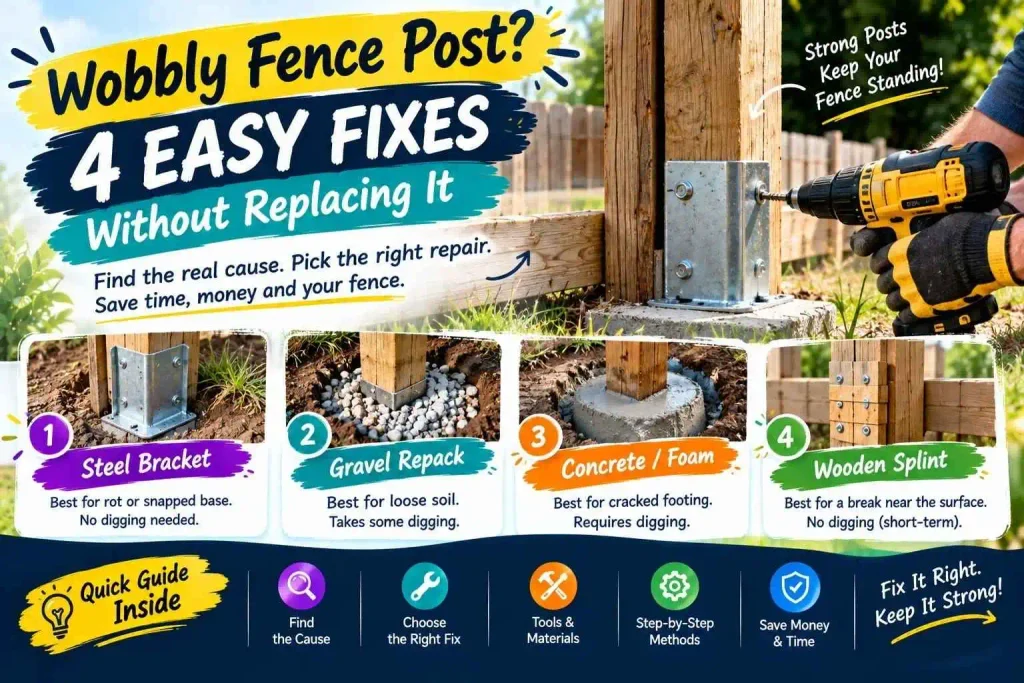
A wobbly fence post can usually be fixed without replacing the whole fence. First, find the cause, then pick the repair that fits. A steel bracket suits a rotted or snapped base, and gravel suits loose soil. Fresh concrete or foam fixes a cracked footing, and a pressure-treated splint helps with a break near the surface. This guide covers four repair methods, the tools you need and simple maintenance tips.
A wobbly fence post is often a one-afternoon job, and the tools may already be in your shed. Below, I’ll show you how to find the real cause and pick the repair that fits. That way, the rest of the fence stays up.
In This Guide
Why You Have a Wobbly Fence Post
How to Choose the Right Fix
Tools and Materials You Need
Method 1: Steel Bracket Fix, No Digging
Method 2: Repack the Soil Around a Leaning Post
Method 3: Fix a Cracked or Shifted Concrete Collar
Method 4: Fix a Broken Post by Sistering
Save or Replace a Wobbly Fence Post?
Simple Maintenance to Keep Fence Posts Rigid
Why You Have a Wobbly Fence Post
A wobbly fence post usually comes from one of three causes: loose soil, cracked concrete or rotted wood. Each cause needs its own repair, and the wrong one means you’ll be back out there next month. Start with a quick check by shaking the post. Then scrape away some dirt at the base and probe the wood with a screwdriver. Five minutes of this saves hours later.
Loose, Eroded, or Saturated Soil
Soil around a post loosens when heavy rain washes it out or freezing and thawing shifts it. Small gaps open up, and the post rocks in them. If the wood looks sound but the post still moves, the soil is the likely cause.
Cracked or Displaced Concrete Footing
A cracked footing lets the post move inside broken chunks of concrete. A hit from the mower, years of wind or a bad mix at the pour can all cause it. To spot one, get down low and look at the top of the concrete. Thin cracks are easy to miss from standing height.
Base Rot or Snapped Wood at the Ground Line
Rot starts at the ground line, where wood meets damp soil almost all year. If a screwdriver slides in like it’s going into cake, that’s your answer. A post that snaps at the ground line has usually rotted there first.
How to Choose the Right Fix
Match the repair to the cause of your wobbly fence post. Then weigh your time against how much digging you want to do.
The Four Repair Options at a Glance
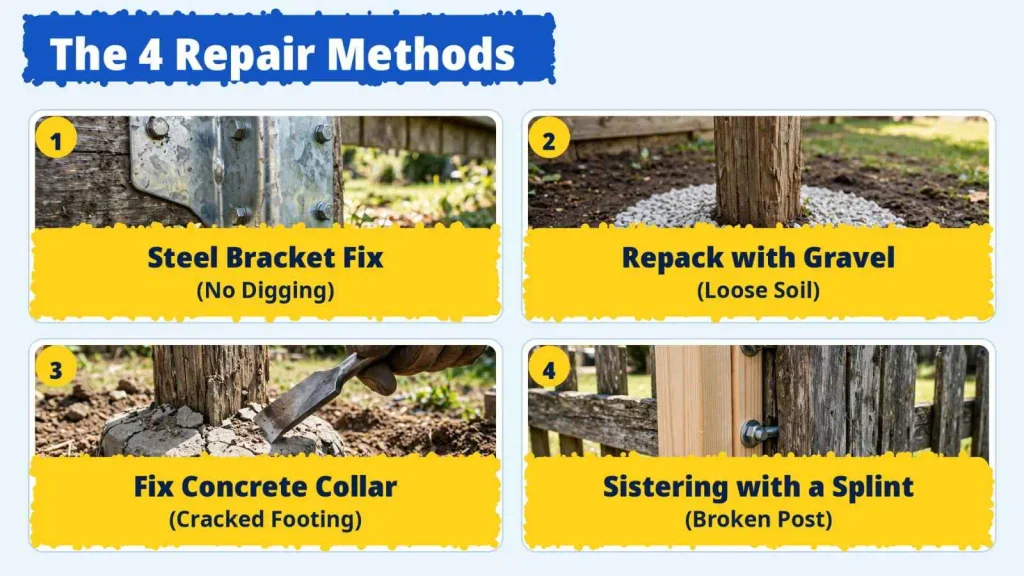
Steel repair bracket: best for rot or a post snapped at ground level. No digging needed.
Gravel repack: best for a sound post in loose soil. It takes some digging.
Expanding foam or fresh concrete collar: best for a cracked footing. Expect some digging.
Wooden splint (sistering): a fast fix for a break near the surface, using scrap lumber. No digging, but it’s a short-term repair.
When “No-Dig” Methods Work Best
No-dig repairs suit a wobbly fence post when the panels are fine and only the base has gone bad. A steel mending spur does the job without breaking up old concrete, which nobody enjoys.
Tools and Materials You Need
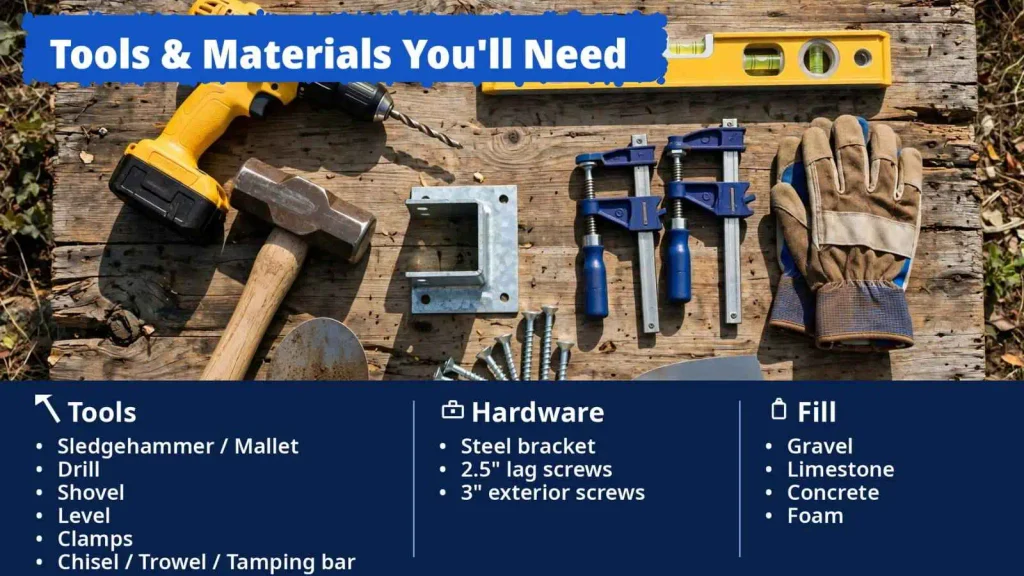
Most wobbly fence post repairs need basic hand tools, a little hardware and something to fill the hole. The lists below cover everything used in the four methods.
Tools: a sledgehammer (or heavy mallet), cordless drill, shovel, 2-foot level, clamps, cold chisel, trowel and tamping bar. Grab some 2x4s and stakes for bracing too.
Hardware: a heavy-gauge steel repair bracket, which stores often call an anchor spur or mending stake. Add 2.5-inch exterior lag screws to fasten it. For sistering, you also need 3-inch exterior screws.
Fill: crushed angular gravel is the cheap choice, and crushed limestone works great. If you’d rather not mix anything, use expanding fence foam. Quick-dry concrete is fine too.
Method 1: Steel Bracket Fix, No Digging
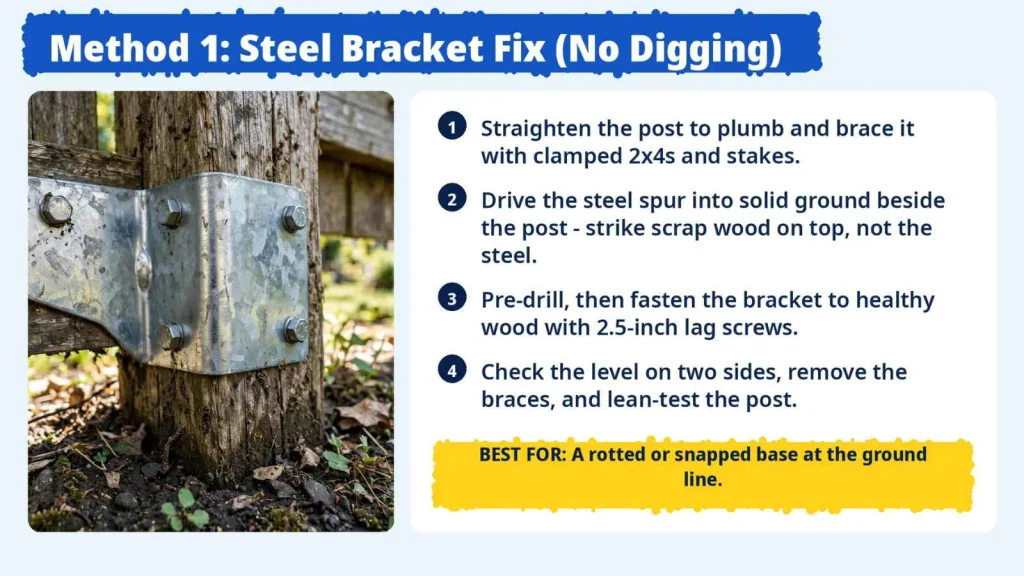
This fix suits a base that is rotted or snapped at the ground line. It’s usually the easiest way to fix a wobbly fence post, because you skip the digging.
Step 1: Straighten and Brace the Post
Set your level on the post and push it back to plumb, which means straight up and down. Then clamp 2x4s on a diagonal from the post to stakes in the ground. Now the post holds itself up, and both hands are free.
Step 2: Drive the Steel Spur into the Ground
Place the spur right against the post, next to the footing. Don’t hit the steel directly, because the top will mushroom and get hard to drive. Instead, lay scrap wood on top and strike that until the spur sits in solid ground. Then push on it, and if it moves, drive it deeper.
Step 3: Fasten the Bracket to Healthy Wood
Pick a spot higher up the post where the wood is still hard. Pre-drill your holes, since old wood likes to split. Then drive a 2.5-inch lag screw through each hole in the bracket.
Step 4: Check Alignment and Remove the Braces
Hold the level against two sides of the post. If it reads true, take off the clamps and braces. Then lean on the post hard from the side, and if the wobbly fence post holds still, you’re done.
Method 2: Repack the Soil Around a Leaning Post
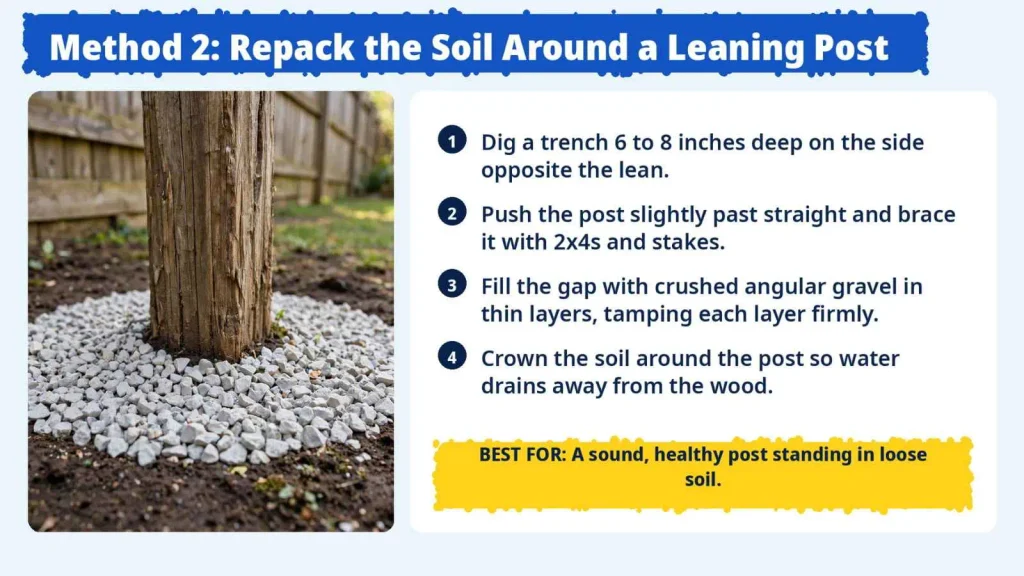
Choose this method when a wobbly fence post is healthy but the soil around it has moved. It works for posts set in soil or gravel, while a post set in concrete needs Method 3.
Step 1: Dig on the Side Opposite the Lean
Dig a trench about 6 to 8 inches deep on the side opposite the lean. That gives the post room to tip back to vertical.
Step 2: Brace the Post and Tamp in Gravel
Push the post slightly past straight, since soil always springs back a little. Then brace it with clamped 2x4s and stakes, as in Method 1. Fill the gap with crushed angular gravel, adding it in thin layers and tamping each layer firmly.
Step 3: Crown the Soil for Water Runoff
Crown the soil by mounding a little around the post so water drains away. You don’t want rain collecting right at the wood.
Method 3: Fix a Cracked or Shifted Concrete Collar
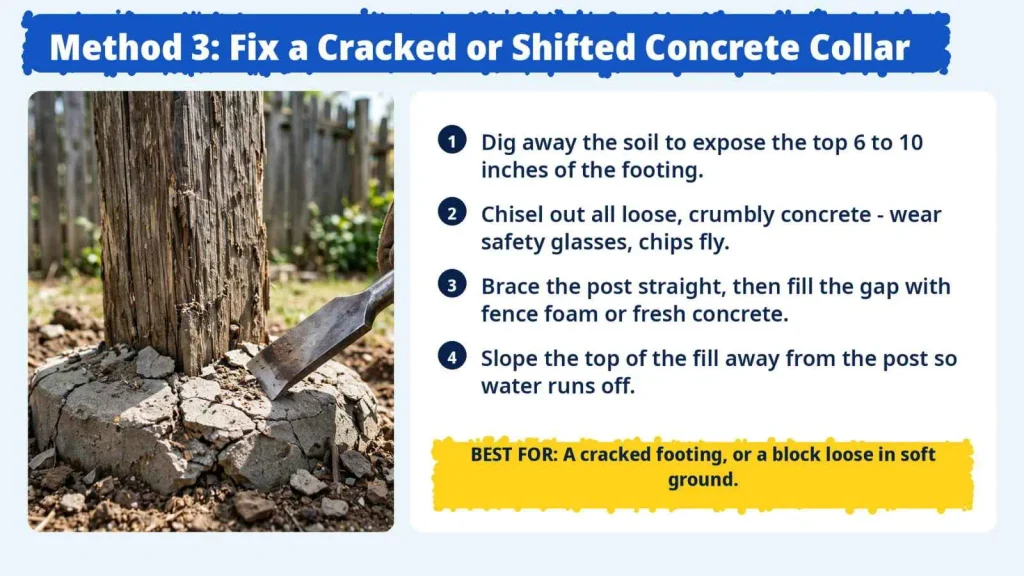
This method is for a wobbly fence post whose concrete has gone bad. The block may have come loose in the hole, or it may have broken into pieces.
Step 1: Expose the Concrete Footing
Dig the soil away from the top 6 to 10 inches of the block, then look closely. Is the concrete cracked, or is the block whole but loose in soft ground? If the block is whole but loose, repack the soil around it with gravel, as in Method 2. If it’s cracked, move on to the next step.
Step 2: Chisel Out Loose Concrete
Use a cold chisel and hammer to break off every loose or crumbly piece. Wear safety glasses, since chips fly. Stop when you reach solid concrete. Then brace the post straight with clamped 2x4s and stakes, as in Method 1.
Step 3: Re-Anchor with Foam or Fresh Concrete
Use fence foam for a quick, no-mix fix or rapid-setting concrete for a traditional one. Foam sets fast and blocks water, while concrete takes longer to set. Follow the label for either product and fill the gap around the post. Leave the braces on until it sets. If mixing sounds like a pain, foam is the easier choice.
Step 4: Slope the Top Away from the Post
Slope the top of the new fill away from the post so water runs off. If water sits on the wood, you’ll be fixing this wobbly fence post again.
Method 4: Fix a Broken Post by Sistering
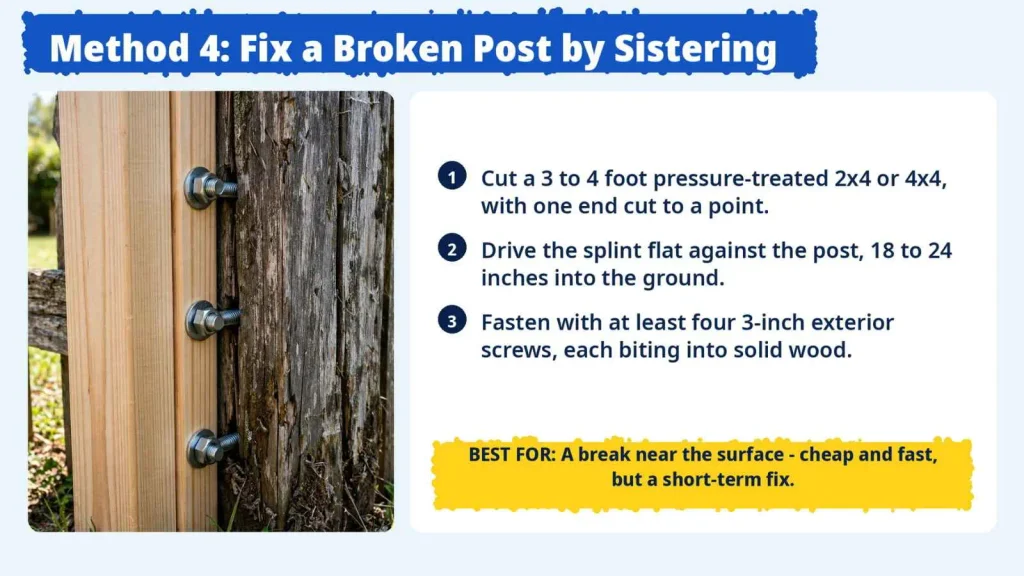
Sistering is a good fallback when a wobbly fence post breaks near the surface and you have no bracket. It means fastening a new piece of wood beside the broken one. It’s cheap, and you may already have the lumber lying around.
Step 1: Cut a Pressure-Treated Splint
Cut a 3 to 4 foot piece of pressure-treated 2×4 or 4×4. Cut one end to a point so it drives into the ground more easily. Not sure which type to buy? You can easily saw guide on fence repair texas.
Step 2: Drive the Splint Beside the Post
Hold the splint flat against the broken post and hammer it down about 18 to 24 inches. That sounds deep, but the depth is what keeps the splint steady.
Step 3: Screw the Splint to the Post
Use at least four 3-inch exterior screws, and run them through the splint and into the post. Each one must bite into solid wood, not the broken part. Coated exterior screws are made to resist rust, so they’re worth the few extra dollars.
Save or Replace a Wobbly Fence Post?
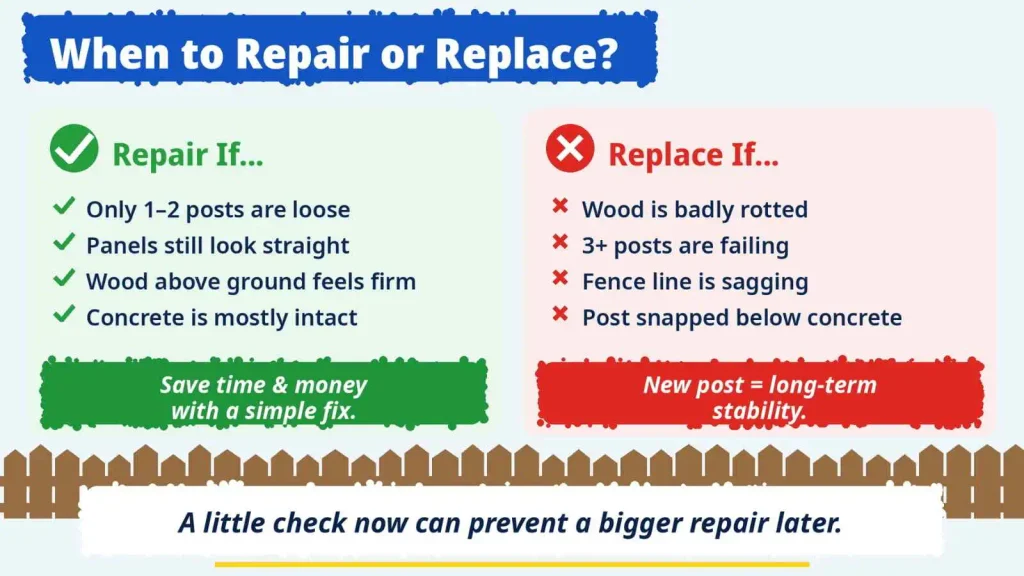
Save a wobbly fence post when the damage is small, and replace it when the base is badly rotted. Run through these checks to see which side yours is on. If several posts are failing, compare fence replacement costs guide before you decide.
Signs You Can Fix It
- Only one or two posts are loose, and the panels beside them still look straight.
- A screwdriver pushed into the wood above ground feels firm.
- The concrete underneath is mostly in one piece.
Signs You Must Replace the Post
- Rot has eaten far into the post, and a screwdriver sinks in easily.
- Three or more posts in a row rock freely and the fence line sags.
- The post snapped cleanly below the concrete, so a bracket has nothing to hold onto.
Simple Maintenance to Keep Fence Posts Rigid
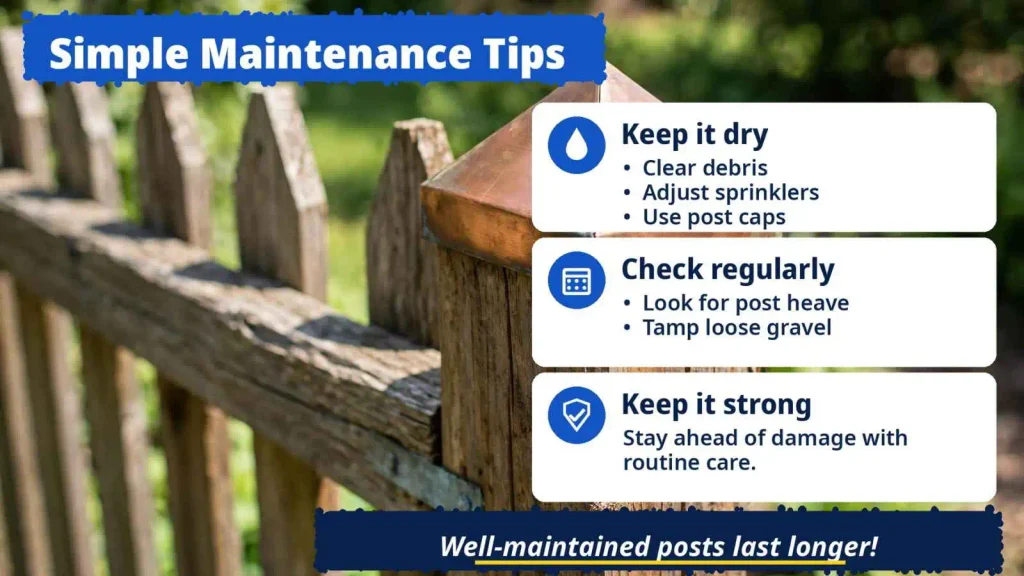
Proper maintenance keeps water away from your fence posts and prevents wobbling over time. Follow these essential practices to ensure your post bases remain strong and rigid year-round.
Preventative Moisture Care
Taking simple steps to manage moisture around your fence posts protects the wood and extends its structural lifespan.
- Clear debris: Pull mulch, dead leaves, and soil back a couple of inches from each post to prevent trapped moisture against the wood.
- Adjust sprinklers: Direct water spray away from posts to avoid soaking them daily.
- Cap post tops: Install copper, aluminum, or composite caps to seal out rain from the end grain.
Seasonal Inspections & Routine Checks
Performing regular visual checks throughout the year helps you spot minor post shifts or looseness before they turn into major structural issues.
Inspect spring post heave: Walk the fence line each spring to check for post lifting or shifting caused by frost.
Tamp loose gravel: Re-pack loose gravel around post bases before storm season arrives.
Follow a maintenance routine: Consult a wood fence maintenance checklist or contact professional fence repair services for larger repairs.
FAQs
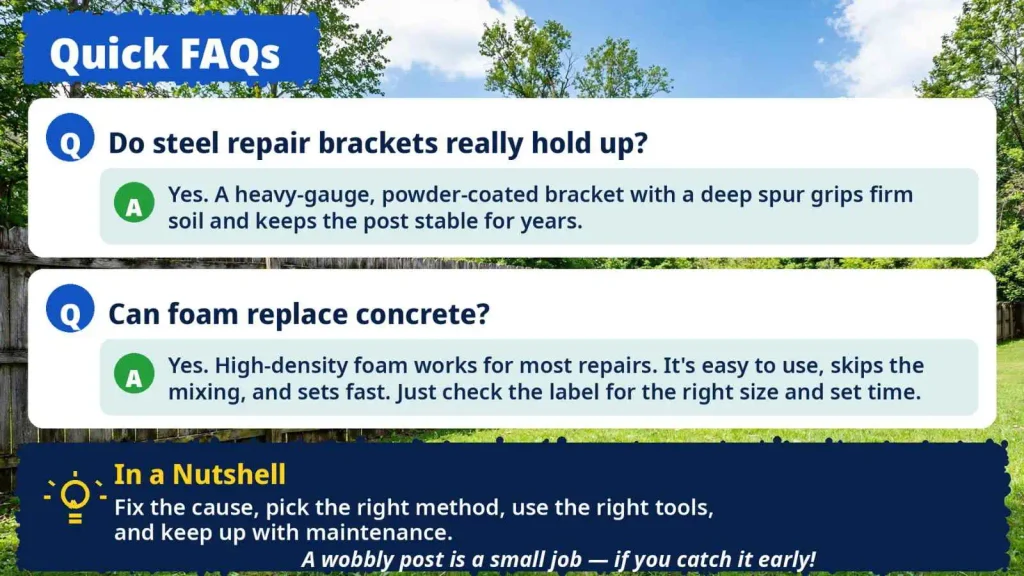
Do steel fence post repair brackets really hold up?
Yes, a good bracket holds up well on a wobbly fence post when you buy a heavy-gauge, powder-coated one. The spur grips firm soil below the rot, so the post stands on solid ground again. Drive it deep, fasten it to sound wood, and it should last for years.
Can foam replace concrete on a wobbly fence post?
Yes, high-density foam can replace concrete for most post repairs. You skip the mixing, and it works best when the post itself is still solid. Check the label for the exact set time and the post size it covers, since products differ.
In a Nutshell
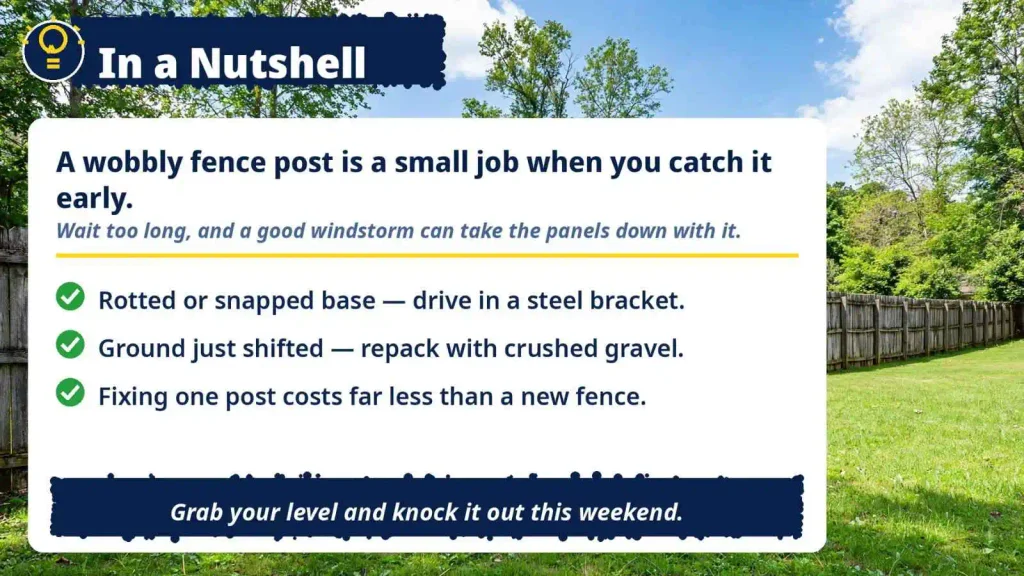
A wobbly fence post is a small job when you catch it early. Wait too long, and a good windstorm can take the panels down with it. For a rotted or snapped base, drive in a steel bracket. If the ground just shifted, repack it with crushed gravel. Either way, fixing a wobbly fence post costs far less than a new fence. Grab your level and knock it out this weekend.