Free on-site estimatesServing Austin, Dallas, Houston, Fort Worth & San AntonioContact our fence specialists

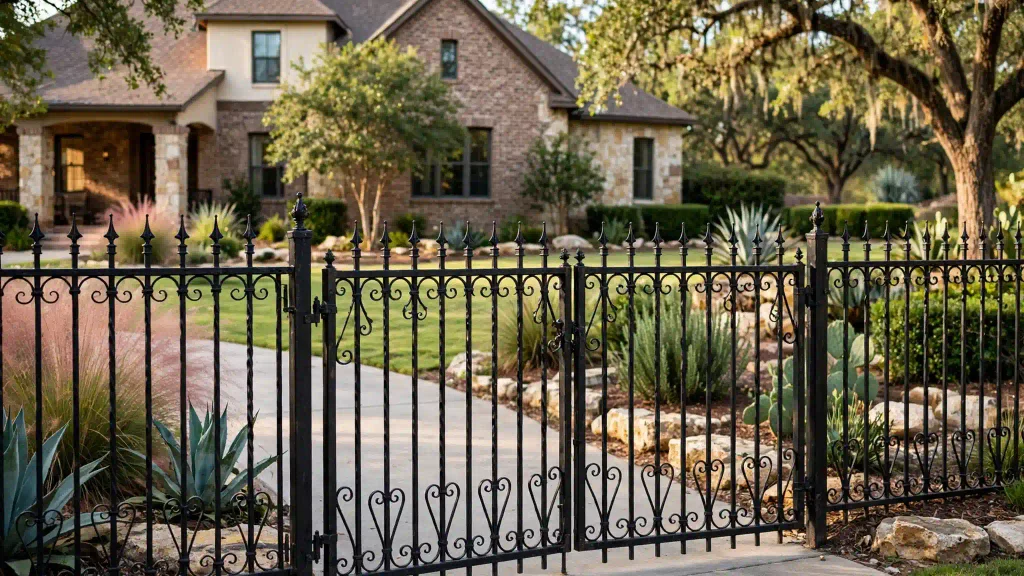
A wrought iron fence can give your Texas home a classic look while adding a strong boundary around your property. But before choosing a design, it’s worth knowing how much it will cost. In 2026, a standard wrought iron fence typically costs $28 to $35 per linear foot in Texas, while custom designs can range from $45 to $80. Most homeowners spend between $1,300 and $7,000, depending on the fence size, style, and installation needs.
These are general market estimates, not a quote from Fence Repair Texas. Your actual cost will depend on the fence height, material, design, gates, and ground conditions. This guide breaks down average prices, installation costs, the factors that shape wrought iron fence cost in Texas, maintenance needs, and ways to save. You’ll also learn how wrought iron compares with steel and other fencing materials so you can make the right choice for your property.
What Is a Wrought Iron Fence?
A wrought iron fence starts as iron that’s heated and hammered into shape, either by hand or by machine. That process gives the metal its strength and its ability to handle stress. Most designs include spear-shaped pickets, curves, scrolls, or iron leaves, and homeowners pick them for the classic look, clear boundaries, and added security.
True Wrought Iron vs Steel
True wrought iron, steel, and cast iron aren’t the same thing, and the difference shows up in both price and rust. Real wrought iron rarely appears in big box stores, so most fences sold under that name are actually steel. That’s not a bad thing, since steel can be strong and good-looking when it’s well made and well coated.
Cast Iron and What to Ask
Cast iron is poured into molds, which can make it more brittle. Before you buy anything, ask what metal is used, what coating goes on it, and how the joints are welded. Those answers say more about long-term value than the name on the product.
Wrought Iron Fence Cost in Texas at a Glance
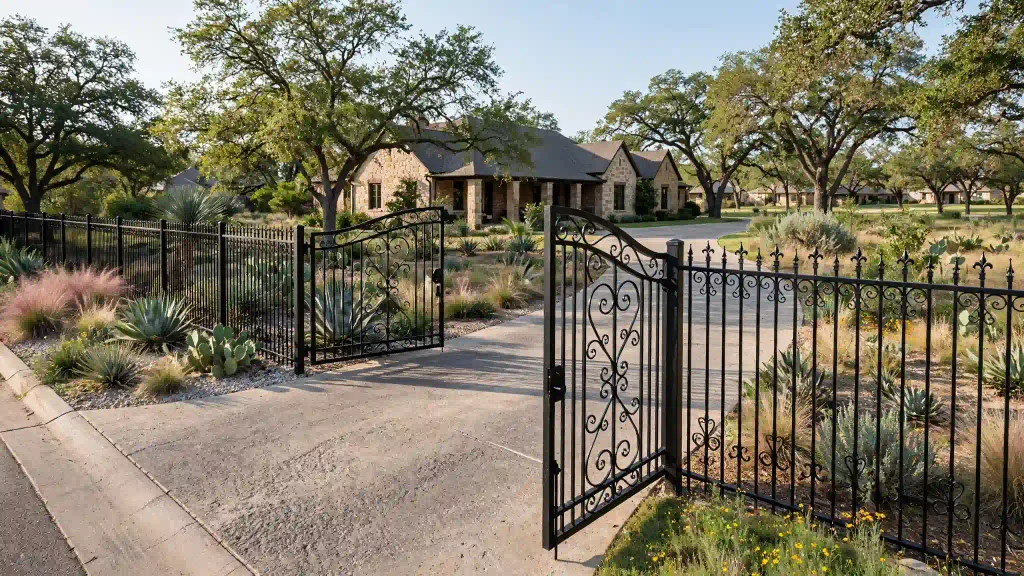
The average wrought iron fence cost in Texas is about $3,500 for a typical project. Published guides vary, though, with averages of roughly $3,300, $3,500, and $3,800, so don’t treat any single figure as firm. Height and iron type affect the price the most, and both get a closer look right after the table.
| Measure | Market guide | What it means |
| Small project | $445 to $1,400 | A very small run or minimal work |
| Most common project | $1,300 to $7,000 | A typical home fence project |
| Large ornate project | Over $12,000 | A large area or detailed design |
| Average project | About $3,500 | A planning average |
| Standard per linear foot | $28 to $35 | A standard design before extras |
| Custom per linear foot | $45 to $80 | A complex or custom design |
A per-foot price isn’t a project total. For wrought iron fence cost in Texas, length, height, gates, footings, and site work like grading or old fence removal all get added on top. Gates and hardware are priced separately, which means a short fence with two gates can cost more than a long, plain run. Because height, finish, and design each shift the price, these ranges overlap.Use these ranges to plan your wrought iron fence cost in Texas, then get a site quote based on your exact length, height, and gate count..
How Does Height Change the Price?
Taller fences raise wrought iron fence cost in Texas because they need more material, deeper footings, and extra install time. Four feet is the most common home height. It marks the boundary and slows down climbers without the price of a 6-foot fence. A shorter fence saves money but offers less security, so think about what the fence actually needs to do. Check local rules before you decide, too, because front yards and corner lots can have height limits.
| Height | Market guide per linear foot | Best use |
| 3 feet | $22 to $30 | A low front boundary or garden edge |
| 4 feet | $25 to $40 | The most common home height |
| 5 feet | $30 to $50 | A taller front or side boundary |
| 6 feet | $33 to $55 | A strong boundary with more presence |
| Over 6 feet | $40 to $60 | A high security or estate boundary |
Which Type of Iron Costs What?
When you compare wrought iron fence cost in Texas by type, plain iron usually costs the least, galvanized iron sits in the middle, and ornamental iron costs the most Plain iron has straight bars with few details and is usually black, though bronze, white, or green finishes can raise the price. Galvanized iron has a zinc finish that helps prevent rust, which matters most in humid and coastal areas where moisture and salt air attack bare metal. It costs more up front, but it can cut repair and repainting costs down the road. Ornamental iron adds curls, twists, and decorative post toppers. All that extra work and material raises the price, so it fits best on a front yard where the fence is part of your home’s look.
Coating changes the cost as well. Standard paint, powder coating, a non-standard color, and a galvanized base under paint are all different jobs, each with its own price and lifespan.
| Type | Market guide per linear foot | Look and rust resistance | Best use |
| Plain iron | $25 to $35 | Clean and basic, needs coating care | A simple strong boundary |
| Galvanized iron | $28 to $35 | Zinc finish, stronger rust resistance | Humid and coastal areas |
| Ornamental iron | $30 to $50 | Detailed and decorative, needs finish care | A front yard feature fence |
What Affects Wrought Iron Fence Cost in Texas?
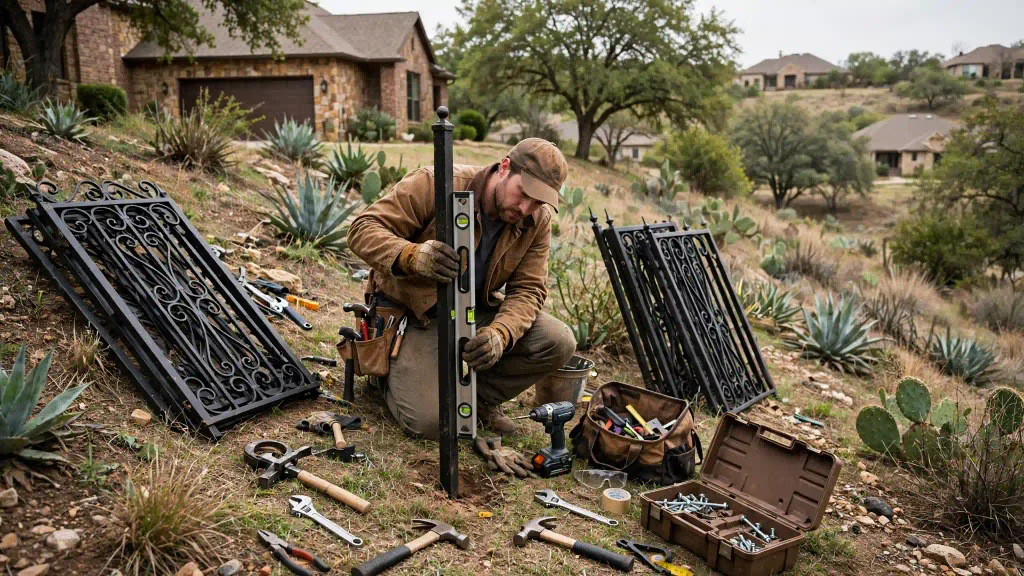
Design, material quality, size, and site conditions drive most of your wrought iron fence cost in Texas. Labor and add-on jobs explain why a final bill often lands above the first estimate, so each gets a closer look below.
Design and Material Quality
Design is one of the biggest drivers of wrought iron fence cost in Texas, since swirls and fancy post caps take more time and skill than straight bars. A simpler design or a standard picket thickness can trim the total without costing you strength. Material quality counts too. Higher-grade iron and a good coating cost more at first but need fewer repairs, while a thin coating may look fine on day one and then start to rust at the joints and welds.
Height, Length, and Site Conditions
Height and length set the base price. From there, rocks, roots, slopes, tight access, and an old fence to remove all add labor time. City jobs can bring tighter rules and higher labor rates, while rural jobs may mean cheaper labor but higher delivery costs.
Wrought Iron Fence Installation Cost: How Much Does Labor Add?
Professional labor adds about 50 percent or more to the materials cost, and that pushes up your wrought iron fence cost in Texas. If materials run $2,000, labor could add $1,000 or more. Guides put installer rates at $30 to $90 per hour, depending on location, skill, and difficulty. A crew might need about 30 hours to fit 200 linear feet, which works out to about $900 at $30 an hour and $2,400 at $80 an hour.
Very tall fences (over 6 feet) and fancy designs can raise labor by 20 to 35 percent. Hard ground, uneven lines, and careful gate alignment can add time as well. That’s why two quotes for the same fence can differ by more than $1,000. When you compare them, ask whether footing depth and concrete are included, whether gates are hung and adjusted, and whether old material gets hauled away.
Which Extras Add to the Bill?
Permits, surveys, removal, grading, gates, and columns are real jobs, and you pay for each one that applies to your property. Together they can push your wrought iron fence cost in Texas above the first estimate. Permit rules vary by city and county, so no single fee fits all of Texas. Check with your local government for your address. For example, the City of Austin’s fencing rules set separate requirements for fence height, utility easements, and safe fencing.
| Extra cost | Typical market range | When it applies |
| Permit | $20 to $70 | Where a local permit is required |
| Property survey | $200 to $1,500 | Where the boundary line is unclear |
| Old fence removal | $3 to $6 per linear foot | Where an old fence must come down first |
| Tree or bush removal | $200 to $2,000 each | Where plants block the fence line |
| Land grading | $1,000 to $3,225 or more | Where ground is very uneven or steep |
| Simple gate | Around $600 | For a basic wrought iron gate |
| Automated driveway gate | Over $10,500 | For a fancy automated driveway gate |
| Brick columns | $450 to $1,500 each | Where columns are added for looks |
Does Iron Hold Up in Texas Weather?
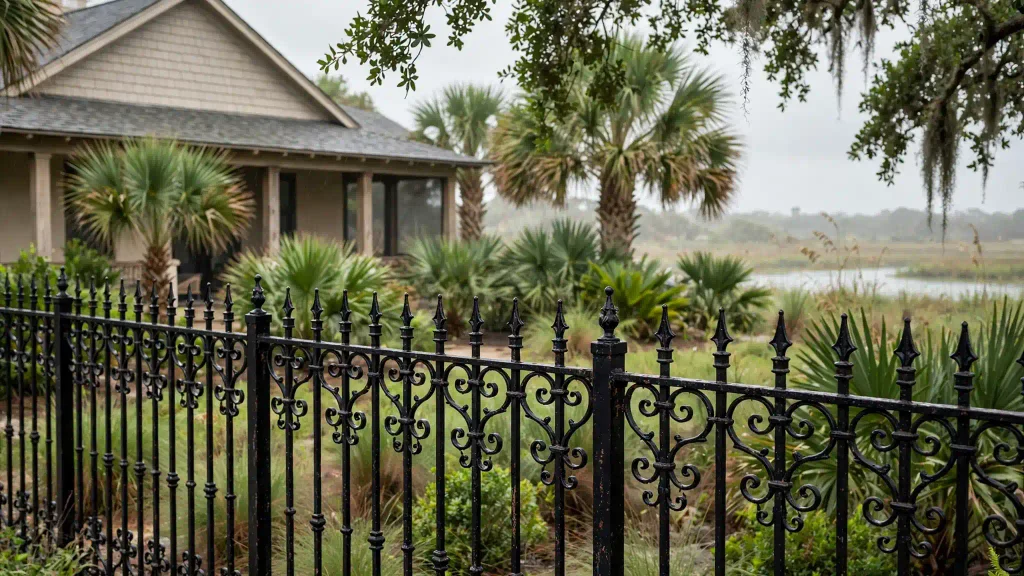
Yes, iron can hold up in Texas weather, which is why wrought iron fence cost in Texas can pay off over time, though humid and coastal areas need closer checks.
Humidity, Salt Air, and the Soil Line
Near the coast, salt air and humidity attack coatings and joints every day, so a good powder-coated or painted finish and sound welds matter most there. The soil line is another weak spot. Moisture, sprinkler splash, and standing water can start rust where you can’t easily see it.
Storm Wind and Post-Storm Checks
Storms are a second concern, though open iron has an edge here. Wind passes through the bars, so the fence acts less like a sail than a solid one would. Even so, a fence can look sound while a footing has loosened or a hinge has shifted. After strong wind, walk the full fence line and check each post for movement. Test each latch too, and look for bent pickets or cracked coating before small damage grows.
Iron vs Wood, Vinyl, Chain Link, and Aluminum
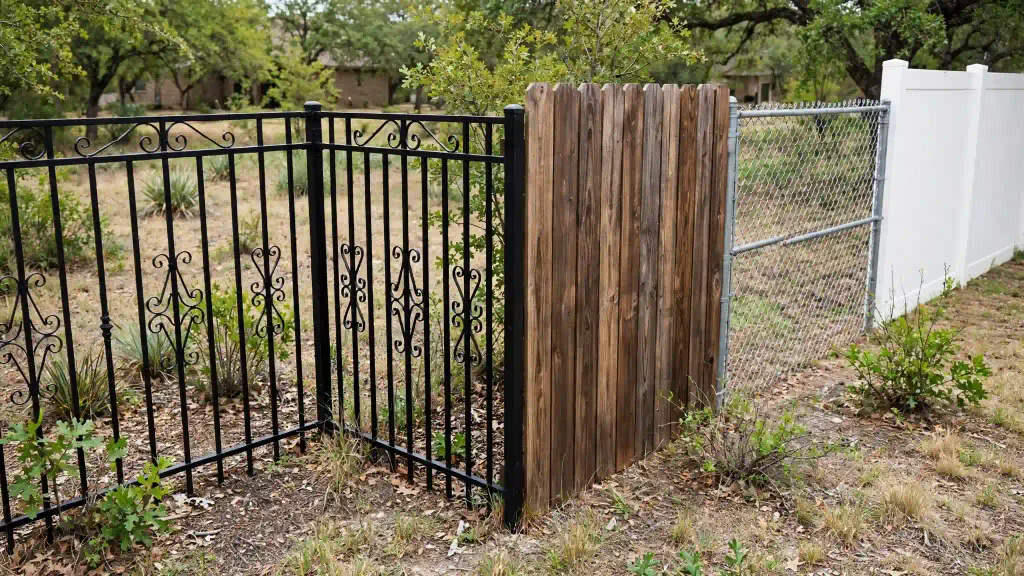
Wrought iron fence cost in Texas runs higher than vinyl or chain link, but iron offers a stronger, classic look.
| Material | Market guide | Privacy | Upkeep | Lifespan | Best use |
| Wrought iron or steel | $28 to $80 per linear foot | Low, open bars | Paint or seal every few years | 50 to 100 years or more | A front feature fence |
| Wood | Varies by species and style | High for privacy panels | Stain, seal, and board repair | Shorter than iron in Texas heat | A private back garden |
| Vinyl | Often cheaper than iron | High for privacy panels | Low, wash and panel repair | Long, but heat can damage panels | A low-maintenance private fence |
| Chain link | $10 to $25 per linear foot | Low, open mesh | Low, tie and rail repair | Long with basic care | Sides, back, and large areas |
| Aluminum | Varies by design | Low, open bars | Low, coating care | Long, rust resistant | A light decorative boundary |
Vinyl and Chain Link
Vinyl is often cheaper, low-maintenance, and resistant to rot. It lacks iron’s strength and style, though, and heat can crack or warp the panels. Chain link is durable, budget friendly, and a good fit for a large yard, but on its own it offers little privacy or curb appeal.
Aluminum and Wood
Aluminum is lighter than iron and resists rust, which makes it a fit for a decorative boundary. Wood gives you privacy, but it needs staining and board repair, and Texas heat shortens its life compared with iron.
Wrought Iron Fence Upkeep: What to Do and When
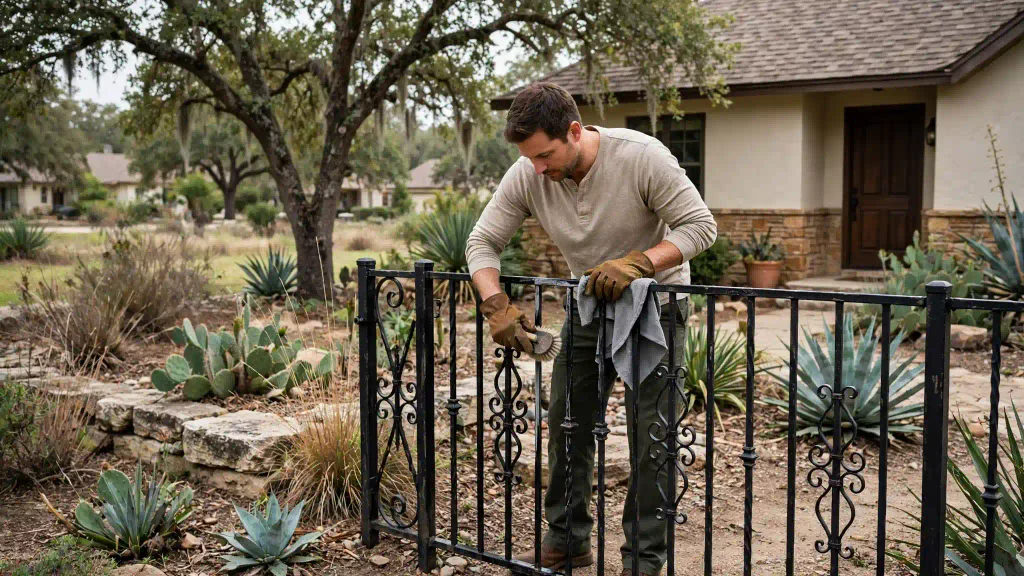
Regular upkeep helps a wrought iron fence last for decades and saves you from big repairs later. The work is easy, but it has to happen on time. Rust caught early is a small sanding job, while rust left alone can weaken a joint or picket.
Upkeep Schedule
| Maintenance job | How often | What to do |
| Clean the fence | Every few months | Brush off dirt and cobwebs, wash lightly |
| Check for loose parts | Every few months | Tighten pickets, screws, hinges, and latches |
| Check welds and joints | Twice a year | Look for cracks, rust, and coating damage |
| Trim nearby plants | As needed | Cut vines and bushes back for airflow |
| Touch up rust spots | At once when seen | Sand, prime, and repaint the spot |
| Paint or seal | Every 2 to 3 years | Repaint or reseal to keep moisture out |
Cleaning and Rust Repair
Start with cleaning. A wire brush or cloth will remove dirt, cobwebs, and rust spots. If you find rust, sand it lightly, then prime and repaint so moisture can’t reach bare metal.
DIY or Hire a Pro: Which Is Better?
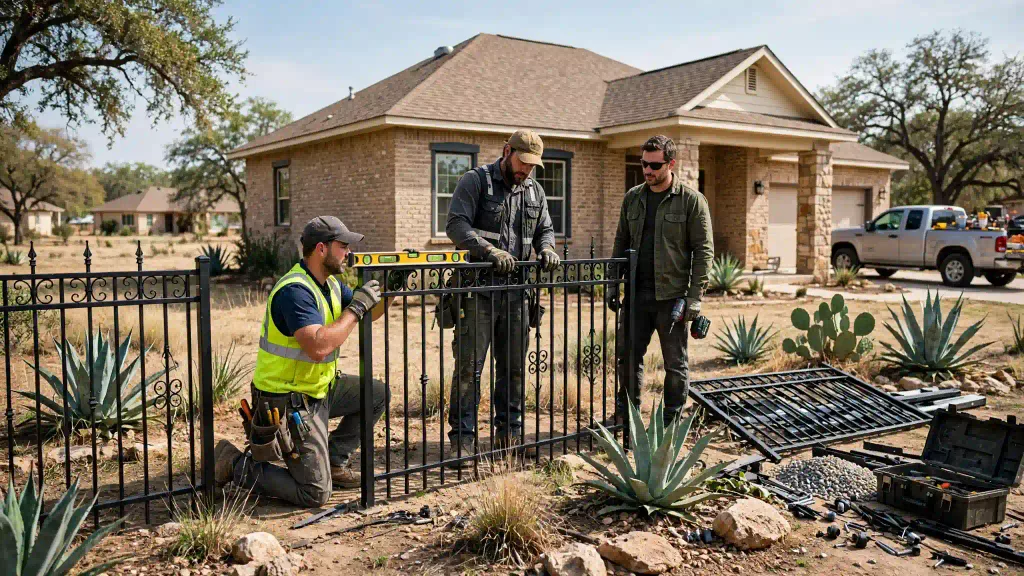
For most homeowners, hiring a pro is the safer and quicker choice, even though labor adds to wrought iron fence cost in Texas.
What DIY Really Takes
A DIY job needs a post hole digger, stakes, string or spray paint, gloves, and goggles, which can add $100 to $200. Iron is heavy, so leveling and fixing each panel is tiring and may call for extra help. A slope or rocky soil makes it harder. One mistake in footing depth or panel alignment can show for the life of the fence.
Why Gates Call for a Pro
Complex gates are the clearest reason to call a pro. Automated gates involve motors, power, controls, and safety devices, and a wrong fitting can be unsafe and costly to fix. A pro should know your local building rules, set posts to a consistent depth, and hang gates so they close and latch cleanly. Safety matters throughout, from lifting heavy panels to digging near buried services.
Should You Repair or Replace Iron?
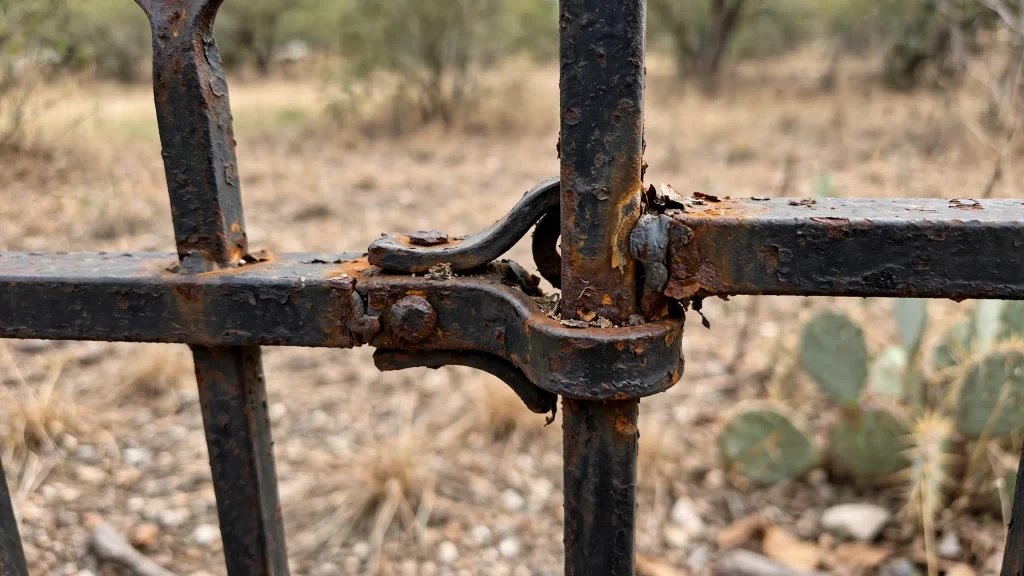
Repair the fence if rust is only on the surface, and replace it if rust has gone deep into the metal.
Reading Rust and Picket Damage
Surface rust can be sanded and repainted. Deep rust or structural damage is different, because it can weaken the metal, and replacing sections or the whole fence may be the better call. Loose or bent pickets are a second clue. A few can be tightened or replaced, but many bent or snapped pickets can point to weak posts, poor footings, or storm damage.
Cost and Age Rules
Two rules can help you decide. If repairs cost 50 percent or more of a new fence, replace it. If the fence is over 60 or 70 years old and in bad shape, replacement may be the wiser move. Most homeowners pay $250 to $900 for simple fixes, while major repairs can pass $1,600 and replacing sections costs $50 to $130 per linear foot.
Ways to Save Without Cutting Fence Life
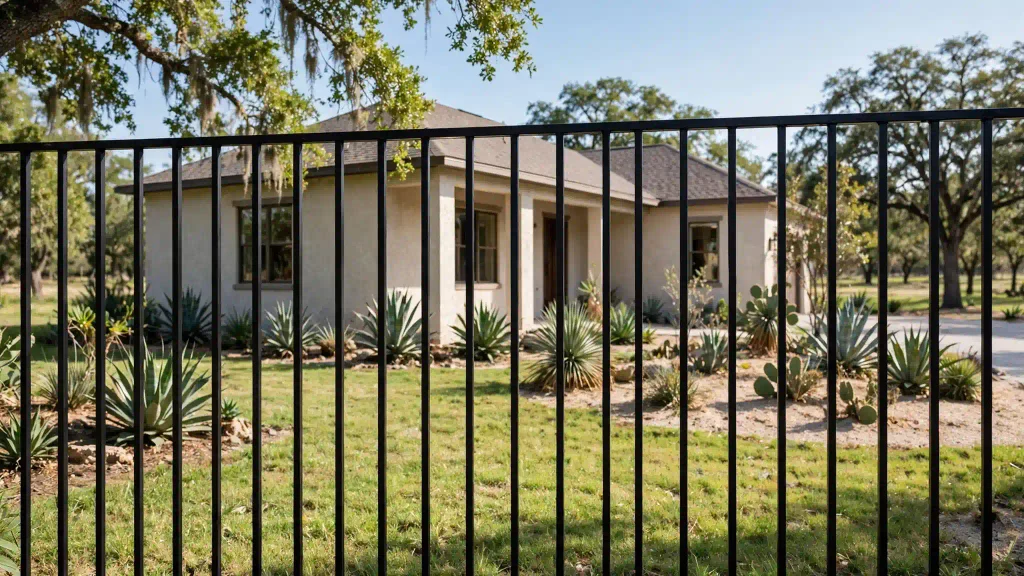
You can lower wrought iron fence cost in Texas by simplifying the design, lowering the height, and mixing fence types.
Smart Design and Layout Choices
Skip fancy extras that raise wrought iron fence cost in Texas without adding real value. Ornamental designs, thick pickets, and special post toppers can add 15 percent or more to your total. For a large yard, put iron at the front where it shows and use chain link on the sides or back, where it costs about $10 to $25 per linear foot.
DIY Painting and Post Checks
Doing your own painting or sealing can lower wrought iron fence cost in Texas by $8 to $10 per linear foot.. Pros, however, use techniques that extend coating life, so a DIY finish needs careful prep. Sand off rust, apply primer, and let each coat dry fully. If you don’t feel confident in that prep, paying for a proper finish is often cheaper over the life of the fence. It’s also smart to check old posts first for rust, movement, and footing soundness, because a weak post will undermine a new fence.
Does Iron Fencing Add Home Value?
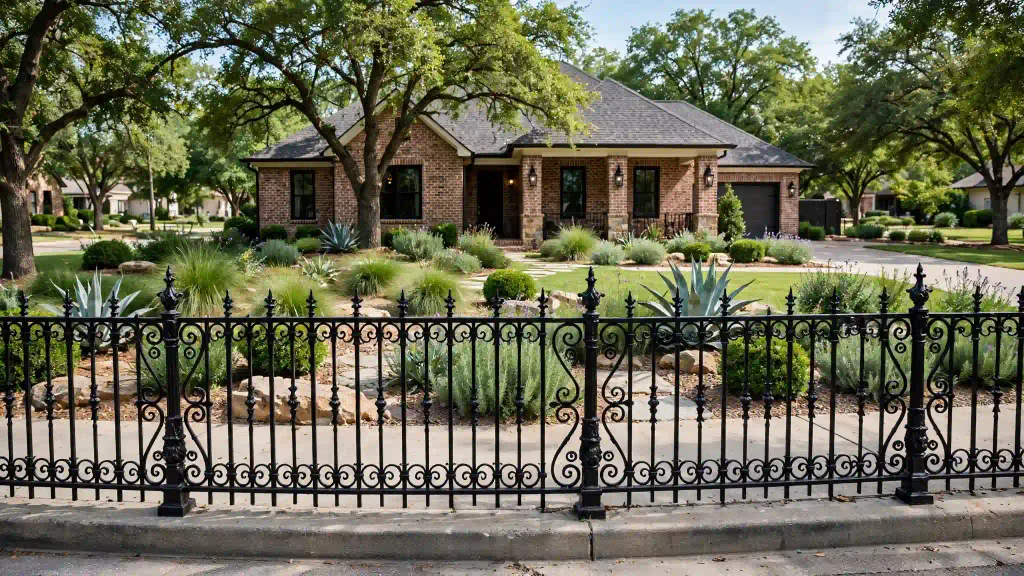
A wrought iron fence can add home value, so it’s worth weighing wrought iron fence cost in Texas against the gain, which depends on your neighborhood.
Security and Street Appeal
Added security helps keep intruders out and pets or children in, and that peace of mind can appeal to buyers. Iron fences also look classic, and a well-kept one makes a home more inviting from the street. Since they can last decades, buyers tend to see them as an upgrade rather than a short-term feature.
Estimated Gain
One estimate puts the gain at 4 to 6 percent.
Common Questions About Iron Fences
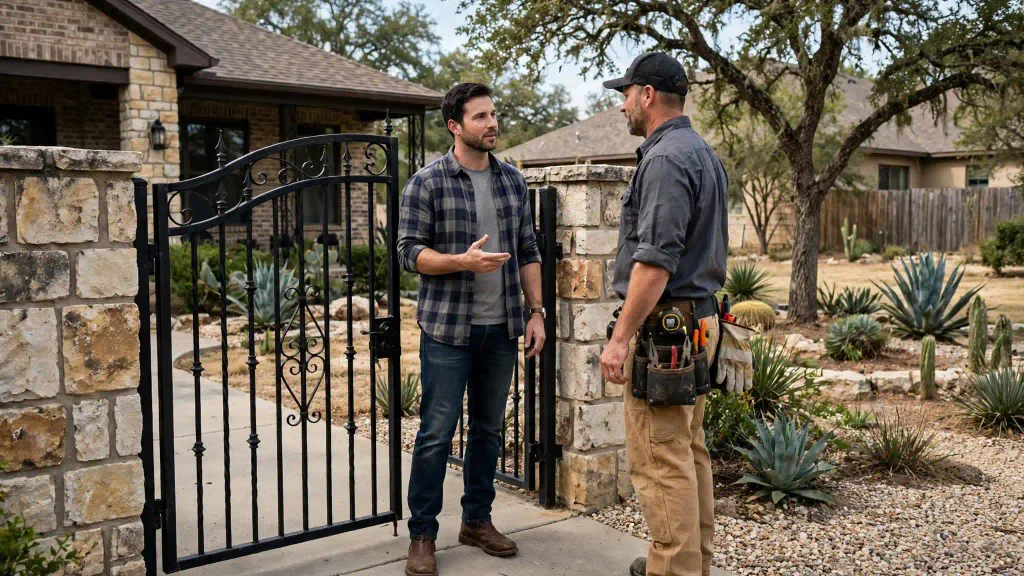
Why choose iron over wood or vinyl?
Pick iron when strength, lifespan, and curb appeal matter most. It outlasts wood, looks sturdier than vinyl, and lets light and air through while still marking your boundary. Wood and vinyl offer more privacy, so you can put iron at the front and a solid fence at the back.
How often should I paint or seal my fence?
Plan on repainting or resealing every two to three years, and a little sooner in humid or coastal parts of Texas. In between, touch up any rust spot as soon as you see it by sanding, priming, and repainting. Quick touch-ups keep small spots from becoming bigger repairs.
Can I buy true wrought iron locally?
Not easily, since most fences labeled iron are steel. Try a specialty metal supplier or a fence installer, and ask them to confirm the metal type, coating, and weld details in writing. Those details tell you far more than the label on the product.
Is a taller fence always better for security?
Not always. A taller fence makes climbing harder, but it also costs more for material, footings, and labor. Four to six feet suits most homes, and spear tops add extra security. Check local height rules first, since front yards and corner lots may have limits.
How long does iron last in coastal Texas?
With a good coating and regular checks, iron can last decades. Rust risk stays higher near the coast than inland, though, so inspect the welds twice a year, check the soil line, and touch up rust right away to protect the fence.
Does iron give privacy?
No. Open bars let neighbors and passersby see right through, so iron works best where you want security and curb appeal, such as a front yard. For privacy, add a solid fence or dense planting along the back and sides. If you line the iron with shrubs, keep them trimmed so air can move.
What should a quote include?
A fair quote for wrought iron fence cost in Texas lists length, height, type, finish, gates, footings, extras, timeline, and cleanup. Get it all in writing so you can compare quotes on the same scope. If a quote leaves out footing, finish, or gate details, treat it as a red flag, since a vague price can grow once work starts.
When is repair no longer worth it?
Replace the fence when repairs cost 50 percent or more of a new one, or when it’s 60 to 70 years old and badly worn. Deep rust, many bent pickets, and weak posts or footings are other signs the fence may be past repair.
In a Nutshell
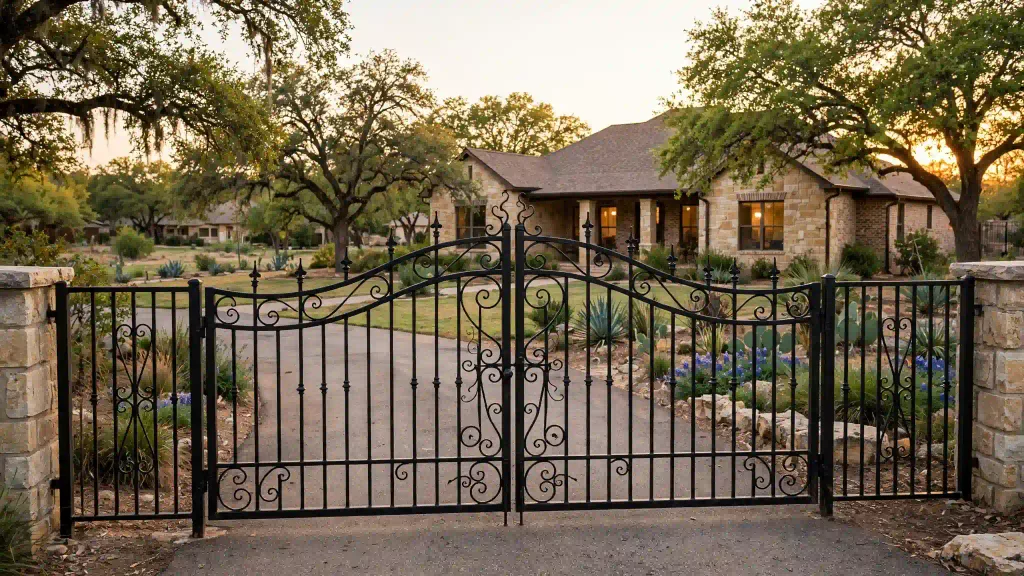
Plan your wrought iron fence cost in Texas around materials, labor, permits, surveys, and extras like gates or brick columns, not the panels alone. Iron is tough, but you’ll still need to paint or seal it every couple of years.
Get several quotes on the same scope, and compare prices, timelines, and reviews. For an estimate contacct at Fence Repair Texas.