Free on-site estimatesServing Austin, Dallas, Houston, Fort Worth & San AntonioContact our fence specialists

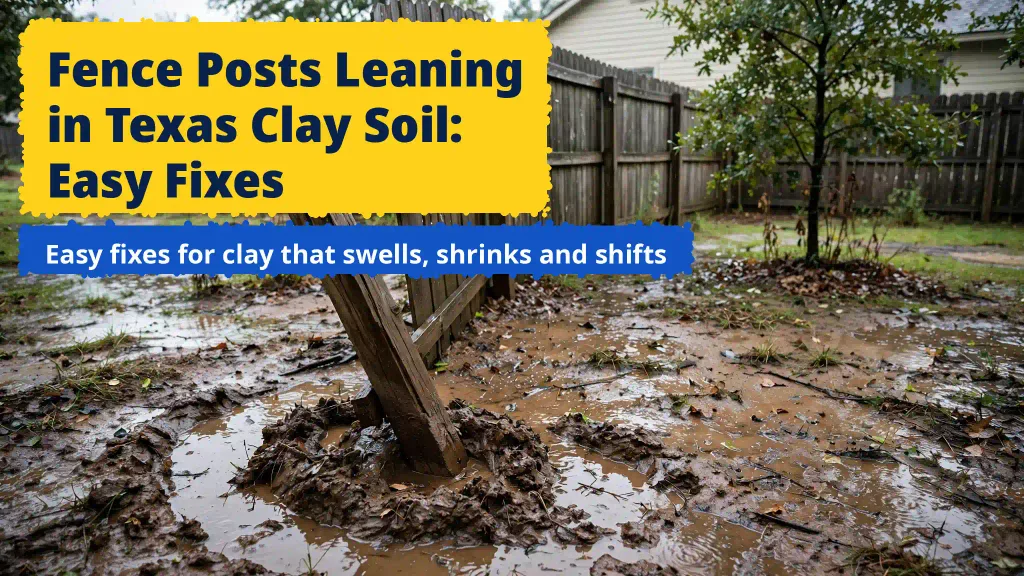
Fence posts leaning in Texas clay soil are one of those problems that feel personal. You straighten a post in spring, it looks perfect, and by August it’s tilting again like nothing happened. Clay swells when it’s soaked and shrinks when the Texas sun bakes it, so the ground never really sits still, and your posts pay for it.
Holding the fence post in place with a board won’t fix the problem for long because the real cause is still underground. Let’s find out why the post is leaning, choose the right setting method for your fence, and reset it properly. I’ll also explain when galvanized steel is a better choice than wood for Texas clay soil.
What Causes Fence Posts Leaning in Texas Clay Soil
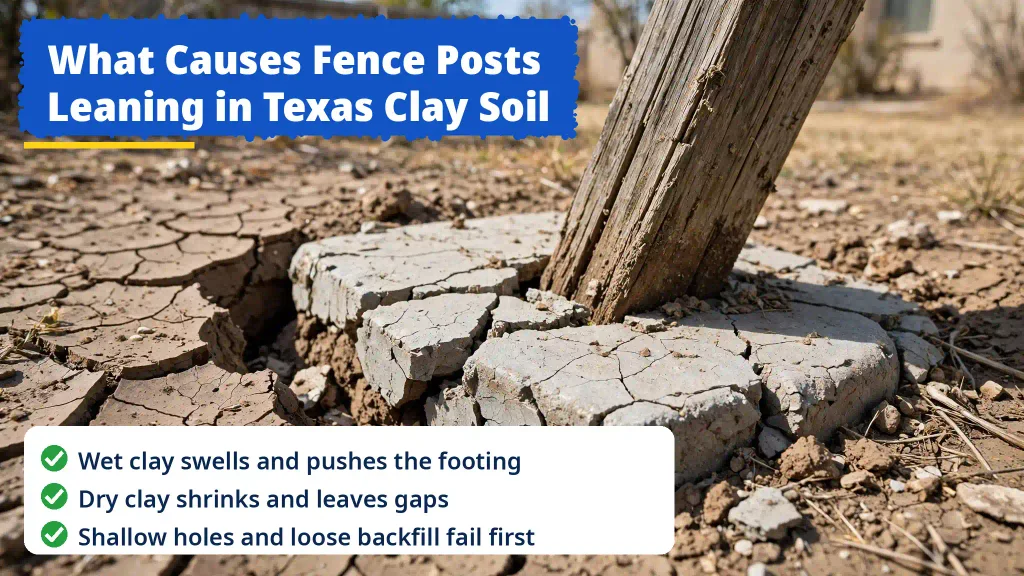
When you see fence posts leaning in Texas clay soil, the ground is usually the one doing the moving, so don’t blame your own work first. Get a feel for how clay behaves and picking a repair that lasts gets much simpler.
Clay Soil Expands When It Gets Wet
Wet clay swells up and shoves against the post footing, and it keeps at it until the ground dries out. Heavy rain with poor drainage is the worst case, since the water just sits there and the pressure climbs until the post finally tilts.
Clay Soil Shrinks During Hot, Dry Weather
Then summer shows up and the whole thing flips. Dry clay shrinks and pulls away from the post, and the gaps it leaves are plenty big enough for a post to wobble and lean.
Texas heat dries the ground quickly, the next storm soaks it again, and that wet and dry swing runs all year long. Every round loosens the soil a bit more. A few years in, it may not pack back around the post like it used to.
Why the Same Fence Post Keeps Leaning
Shallow holes, loose backfill, weak footings, rotted wood. Those are the usual suspects, and if you straighten a post without fixing one of them, it’ll lean again. Every time.
Find the Cause of a Leaning Fence Post
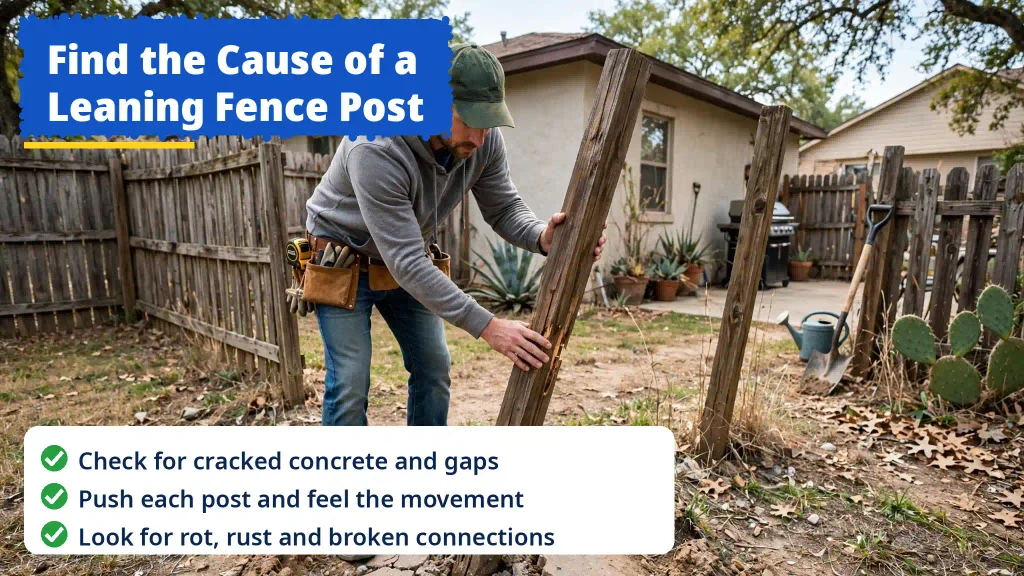
Not every leaning post needs the same repair. A few quick checks will tell you if you’ve got a simple alignment problem or a footing that’s totally gone.
Check the Post, Soil and Concrete Footing
Start at ground level. Look for cracked concrete, loose soil and gaps around the base, then give each post a gentle push by hand and feel how much it moves. Wood needs a look for rot and splits, and metal for rust or broken connections. Walk the whole fence line, too. If the posts next to it lean as well, the problem covers a full section, and one bad post isn’t the story.
Decide Whether to Reset or Replace the Post
Sound wood or steel with a bad footing or soil underneath? Reset it. Badly rotted, cracked or broken wood is a different story, and that post needs replacing. But when several posts have failed or the whole fence feels wobbly, stop. Call a professional before you start pulling things apart.
Choose the Right Post-Setting Method for Clay Soil
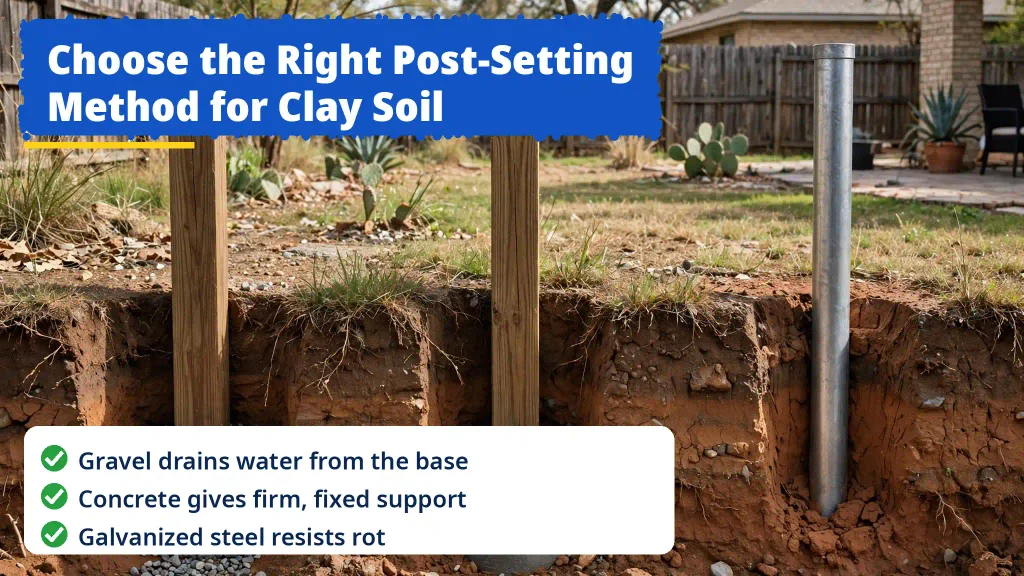
Compare Gravel, Concrete, and Steel Posts
Here’s how the three options stack up.
| Option | Main purpose | Important consideration |
| Compacted gravel | Drains water from the base | Must be spread and compacted evenly |
| Concrete footing | Holds the post firmly | Hole shape and drainage still matter |
| Galvanized steel post | Resists rot | Needs matching connections and a solid footing |
When Gravel Helps With Drainage
Gravel’s real job is drainage. It lets water move away from the bottom of a well-prepared hole, but it won’t hold up a loose or heavily loaded post on its own.
When to Use a Concrete Fence Post Footing
Go with concrete when the post needs firm, fixed support, like on a tall fence. Mix it, place it and cure it exactly the way the product instructions say, because rushed concrete tends to fail early and you’ll be back out there digging.
Match Materials to Your Fence
Look at the fence you actually have, not some generic one. Height, panel weight and wind exposure all play a part, along with the post material and what shape the neighboring sections are in.
Set the Right Hole Depth
Most people start with 3 to 4 feet. Your fence height, post length and local rules decide the real number, so look those up before you pick up a shovel.
Prepare Before You Dig
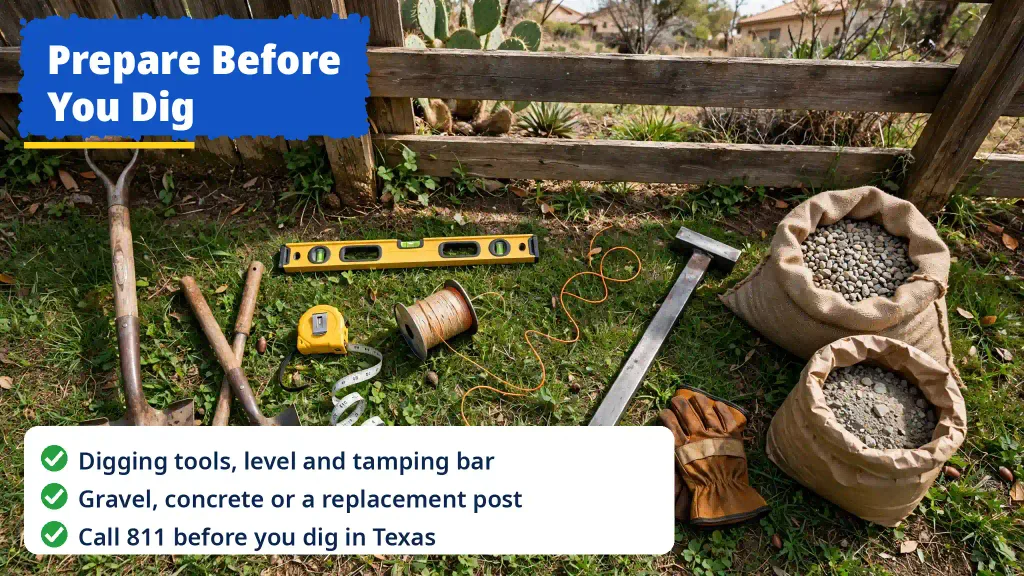
Gather everything first. Nothing’s more annoying than standing beside an open hole with no supplies.
Tools and Materials You Need
You’ll want a shovel or post-hole digger, a level, a tape measure and a string line. Add temporary braces, the right fasteners and a tamping bar for packing down gravel and backfill. Depending on your method, you’ll need gravel, concrete, or a replacement post if the old one’s rotted. Gloves and eye protection go on before the first scoop.
Make the Site Safe Before Digging
Call 811 (Texas811) before you dig. Hitting an underground line with a shovel is dangerous, and it’s completely avoidable.
Next, clear the space around the post and mark it so nobody trips over it. And keep kids and pets well away while that hole’s open.
How to Reset Fence Posts Leaning in Texas Clay Soil
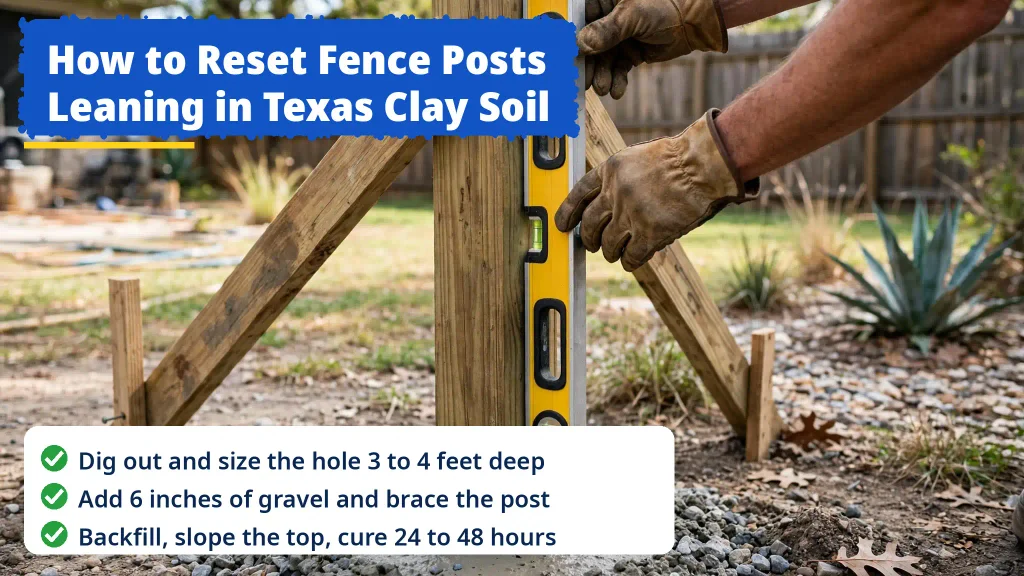
Here’s how to reset fence posts leaning in Texas clay soil, in seven steps. Go in order and don’t rush any of it, because rushed resets are the ones that fail.
Step 1: Secure the Fence and Release Pressure
Brace the panels or rails nearby first, so nothing falls on you while you work. Take off connected parts only when you need to and it’s safe. And never force a heavy or unstable fence upright, because you can crack the post or the rails before you’ve even started.
Step 2: Dig Around the Existing Post
Dig slowly around the post until you can see the footing or the buried base. That’s the moment you decide whether the post is worth keeping.
If the footing’s failed or the wood is damaged, pull the post out completely. If you’re keeping it, go slow, because rushing here can wreck a post you never needed to replace.
Step 3: Size the Hole to Fit the Post
Clear out loose soil and debris, then measure the depth and width against your fence design and the post you’re using. Use the 3 to 4 foot guide only if it suits your fence. Taller fences and heavier panels may need more.
Step 4: Add and Compact Gravel
Put about 6 inches of gravel in the bottom of the hole, so water has a way to drain off from the post base. If your method calls for it, tamp it down evenly with the bar.
Gravel won’t hold the post up, so don’t count on it to.
Step 5: Position and Brace the Post
Set the post at the right height and alignment, then check it with a level on two sides. A post can look dead straight from one angle and still lean from another, and that catches a lot of people. Add temporary braces so it can’t shift while you backfill or pour concrete. Then check the level again.
Step 6: Backfill or Pour the Footing
Follow the product instructions for whatever material you picked. Fill and compact in thin layers, and try not to bump the post out of line as you go. Using concrete? Slope the top so water runs off and away from the post. Water pooling at the base is a sneaky problem in clay, and you won’t notice it until the lean comes back.
Step 7: Let the Post Set, Then Recheck
Leave the post braced until it’s fully cured. A lot of concrete mixes want 24 to 48 hours before they’ll take a load, though your product label has the final say. After that, recheck the alignment, put the rails and panels back on, and look over the connections nearby. Then watch the post through the next few rains and dry spells. See how it holds up.
When Galvanized Steel Posts Make Sense
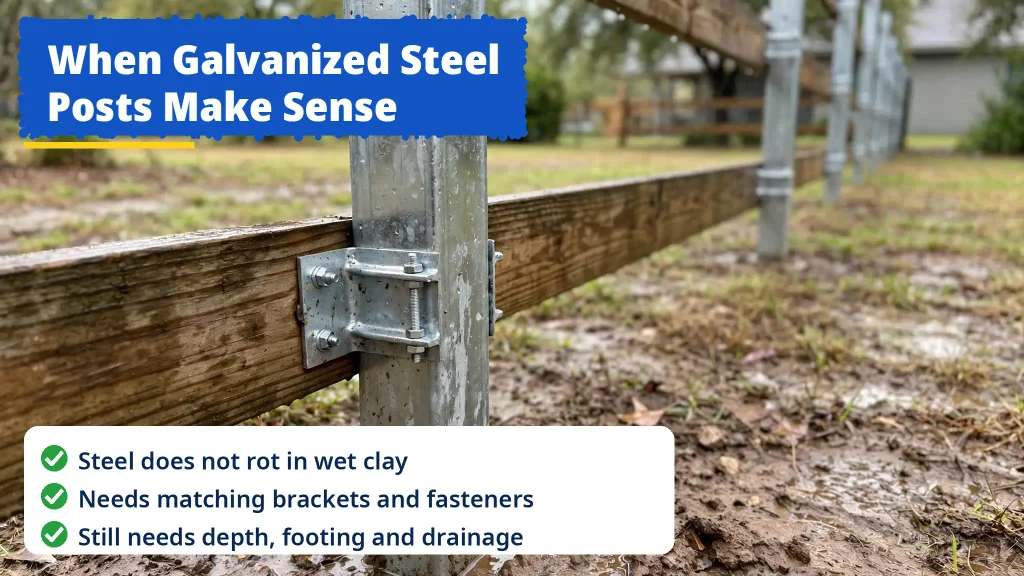
Galvanized steel doesn’t rot, so in wet clay it can easily outlast untreated or damaged wood. Want a post that holds up in tough soil? It’s worth a look. Just match it with compatible brackets and fasteners, or the connections end up being the weak spot.
Limits to Know Before Switching
Steel won’t solve fence posts leaning in Texas clay soil all by itself. It still needs the right depth, a proper footing, good installation and drainage, and a badly set steel post will lean the same as a wood one. Look at material compatibility, fence weight and corrosion protection too, and figure out what it’d cost to swap out the posts you already have.
When to Replace Wood Posts
Swap in steel when a wood post keeps rotting or failing. And if several posts in one run have gone bad, you may be looking at a bigger repair than a single post.
Steel or Wood: How to Decide
Go with the one that fits your fence. Compare post condition, soil movement, existing panels, upkeep and installation work, and the answer usually shows itself.
Common Mistakes That Make Posts Lean Again
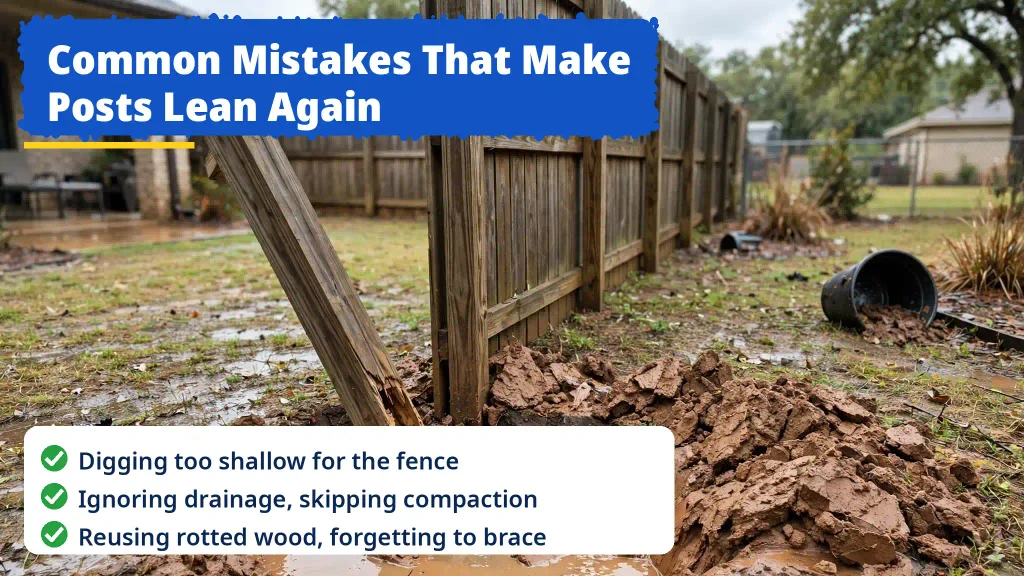
Posts usually come back for the same few reasons. Watch for these:
Digging too shallow: Go too shallow and the post won’t get the support your fence height and soil need, and wet clay punishes that fast.
Ignoring drainage: Water sitting around the footing keeps the clay swelling, so the post keeps moving.
Skipping compaction: Loose backfill lets the post slide sideways every time the soil settles after rain.
Forgetting to brace: Without bracing, a post can drift before the concrete or backfill sets.
Reusing bad wood: A rotten post or failed connection won’t get better just because you straightened it.
Dodge these five and your repair has a much better shot at lasting.
Frequently Asked Questions
How Deep Should Fence Posts Be in Texas Clay?
There’s no single depth that fits every fence. In clay, 3 to 4 feet is where most people start, but taller fences and heavier panels can need more. Look at your post length and local rules before you dig, and ask a fence pro if you’re unsure.
Gravel or Concrete for Fence Posts in Clay?
It comes down to your fence. Gravel handles drainage, so it goes at the bottom of a well-prepared hole. Concrete is what gives firm support, and that matters on tall fences and heavy panels. Lots of people do both: gravel underneath for drainage, a concrete footing around the post.
Why Does My Fence Lean After Rain?
Fence posts leaning in Texas clay soil after rain usually mean the clay swelled. Wet clay pushes on the footing from the sides, and if drainage is poor the water hangs around the base, so the pressure sticks around too. Loose backfill makes it worse, because the post tilts more easily.
Are Galvanized Steel Posts Better for Clay Soil?
Usually, yes. Galvanized steel holds up against rot better than wood, which matters where wood stays damp all the time. Steel still needs the right depth, a solid footing and good drainage, though. Skip those and a steel post can lean just like a wood one.
In a Nutshell
Find out why the post moved before you do anything else. Then get the depth, drainage, support and alignment right. Reset the sound posts, replace the damaged ones, and call a pro if the damage is widespread or the fence feels shaky.