Free on-site estimatesServing Austin, Dallas, Houston, Fort Worth & San AntonioContact our fence specialists

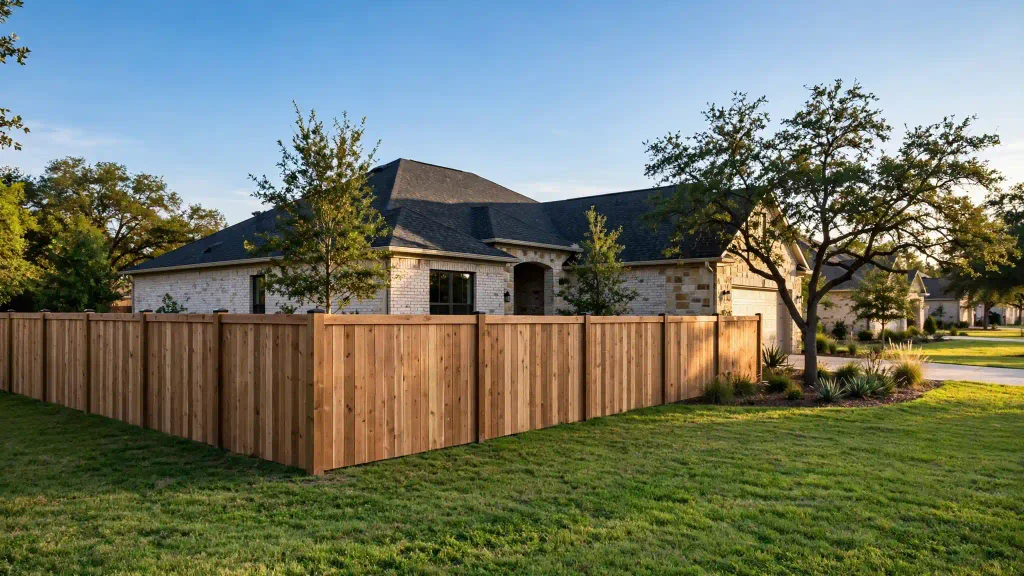
Before you build a fence in Texas, it helps to know how fence laws in Texas actually work. Your city may limit its height, your HOA may restrict its style, and your property deed may set additional conditions. Texas has no general statewide maximum height or state permit for standard residential boundary fences, but separate pool safety requirements apply. That means you still need to check the rules.
This guide explains what fence laws in Texas say, what local cities require, and how to avoid costly mistakes or disputes with your neighbors.
Fence Laws in Texas at a Glance
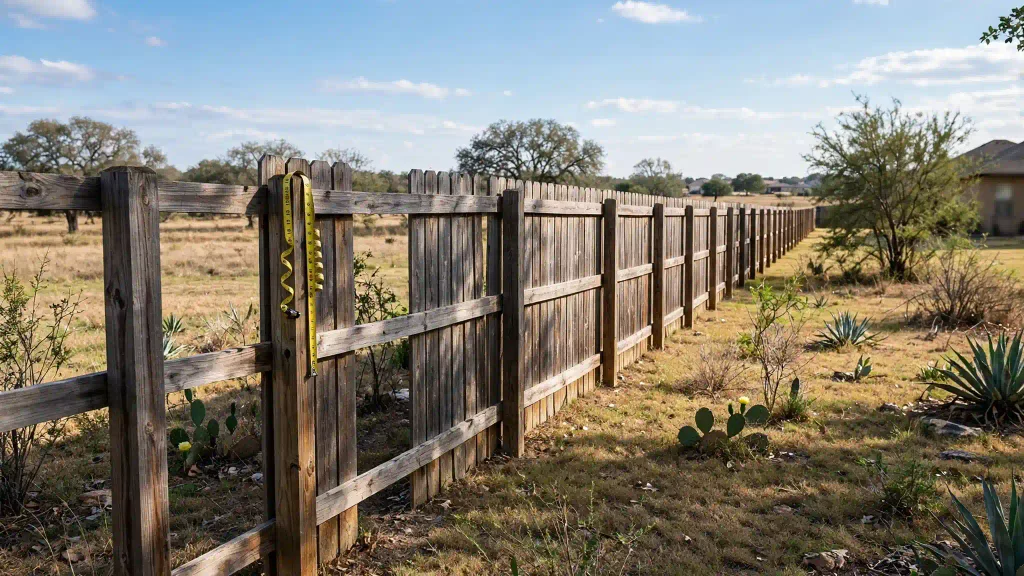
Texas leaves most home fence rules to cities and HOAs. Use this table as a quick map, then check your own address.
| Topic | What Texas says | City and HOA rules |
| Height | No general statewide maximum for standard boundary fences; pool barriers have separate requirements | Cities set limits; front yards and corners are lower |
| Permit | No state permit required | Many cities require one |
| Who pays | No general cost-sharing law for boundary fences | Neighbors can agree in writing |
| Who repairs | The fence owner | An HOA can set upkeep standards |
Which Rules Apply to Your Fence?
Fence laws in Texas come in four layers: state law, city ordinances, HOA rules and the restrictions in your deed. You generally need to meet every applicable rule, but the strictest restriction does not always win.
Cities set height, setback and permit rules. HOAs and deeds can add lawful restrictions, but Texas Property Code §§ 202.022 and 202.023 override certain outright HOA bans on perimeter security fencing and qualifying pool safety enclosures. Get the applicable rules in writing before any work starts.
Who Pays for a Fence Between Neighbors?
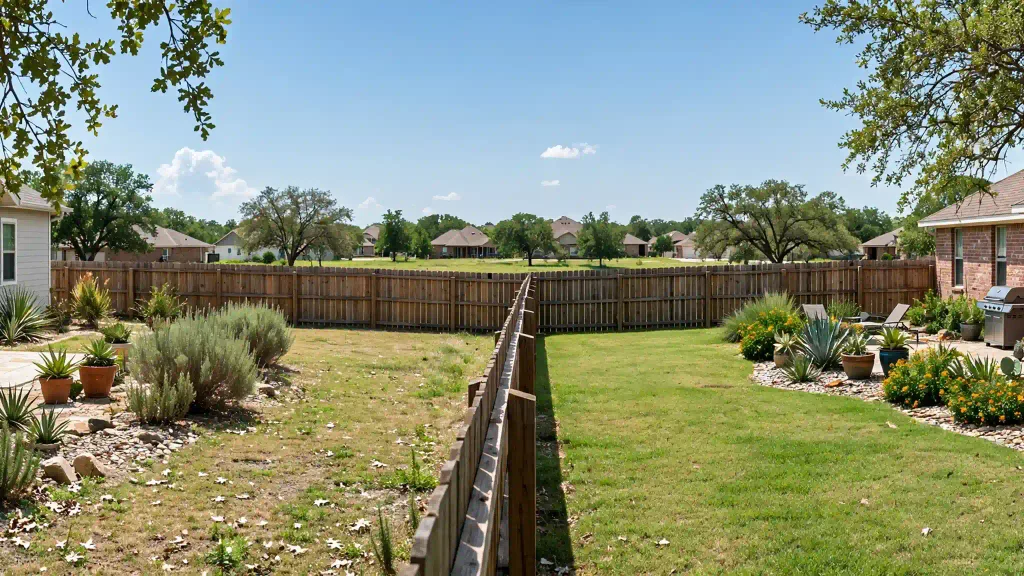
Under fence laws in Texas, no general rule forces neighbors to split the cost of a boundary fence. The Texas Association of Realtors agrees that the state has no specific law for boundary line fences.
That doesn’t stop you from asking your neighbor to chip in. If they agree, put it on paper and spell out who pays for what. Or, with the fence owner’s permission, agree to maintain the side facing your own yard. Don’t paint, stain or alter a neighbor-owned fence without permission. Save the survey, agreement and receipts.
How Tall Can a Fence Be?
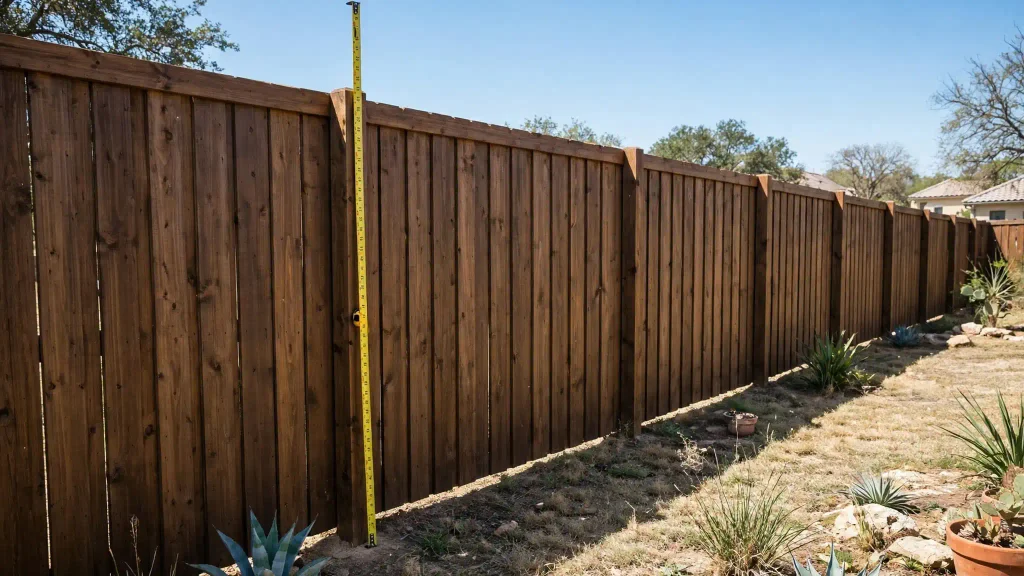
Fence laws in Texas set no general statewide maximum height for residential boundary fences, so your city decides how tall a standard yard fence can bes. Pool enclosures have separate minimum-height, gate and material requirements. Front yards usually have lower limits than back yards.
Corner lots often have extra rules so drivers can see traffic. In Fort Worth, a home fence can’t go above 8 feet behind the front building setback line. Look up your front yard limit and corner lot rule before you start.
Fence Setbacks: Street, Sidewalk and Property Line
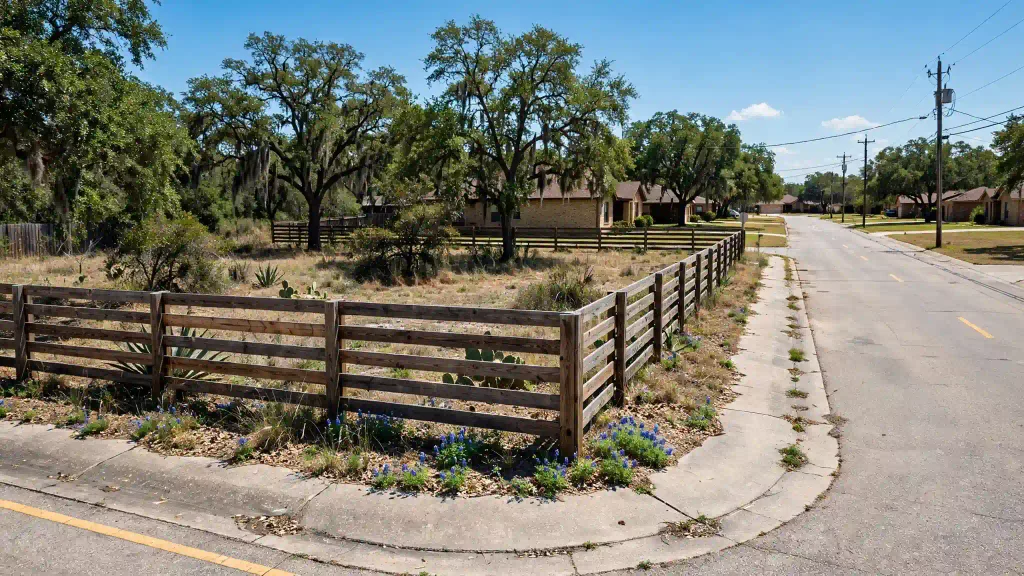
Fence laws in Texas don’t set how far a fence must sit from the street, sidewalk or county road, so your city or county does. Build inside your own property line, and don’t put anything on public land, even the strip beside a sidewalk. At corners, a vision triangle has to stay clear so drivers can see cross traffic. Follow your city’s rules for it.
Check for easements before you dig. An easement gives a utility or another party the right to use part of your land, and a fence built on one can be ordered removed. Texas law also makes you call Texas811 at least two business days before digging.
Do Fence Laws in Texas Require a Permit?
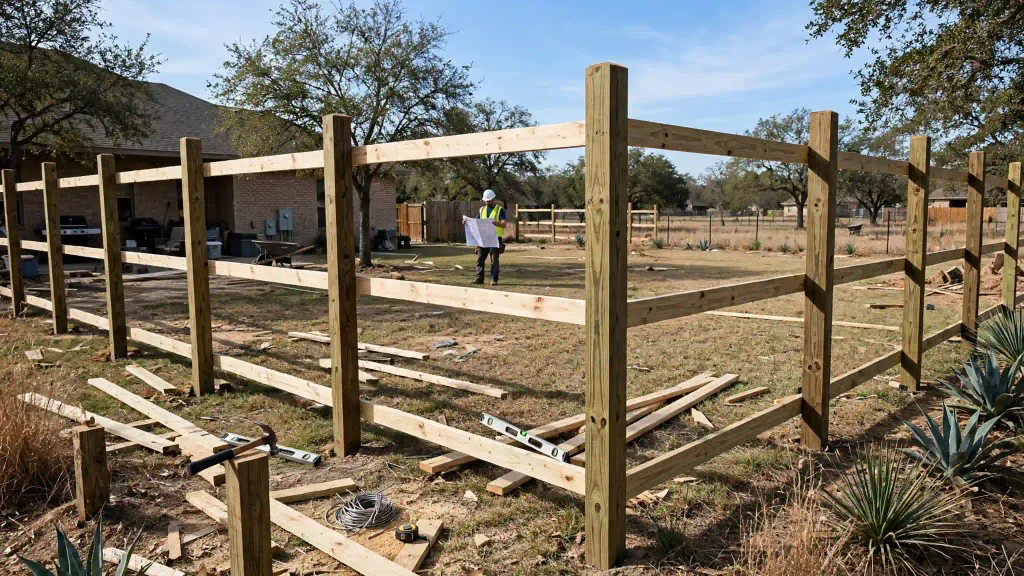
Texas doesn’t ask for a state fence permit, but plenty of cities do. Cities often want a permit for front yard fences, tall fences, masonry fences, and anything in a flood zone or historic area. Dallas, for instance, requires a permit once a front yard fence passes 4 feet or any other fence passes 6 feet. A permit alone does not authorize exceeding a zoning height limit.
Each city sets its own triggers and inspections. In Texas City, you can reach Building Inspections at (409) 948-3111 or through the City of Texas City Building Department.
Fence Laws in Texas on Materials, HOA Rules and Community Guidelines
Cities and HOAs often restrict yard-fence materials. Grand Prairie allows wood, masonry, chain link, wood slats and wrought iron. It bars R-panel, metal and plywood. Irving rules out rope, chicken wire, broken glass, netting, plywood and more.
Pool barriers need separate attention. Texas Health and Safety Code Chapter 757 directly covers qualifying multiunit and HOA pool enclosures—not every private backyard pool. It generally requires 48-inch minimum heights, self-closing and self-latching gates, restricted openings and non-climbable geometry. Covered enclosures built after January 1, 1994, cannot use chain link. Check locally adopted safety codes for single-family pools and spas.
Your HOA can regulate fence designs and require approval, but covered single-family HOAs cannot outright ban perimeter security fencing under Property Code § 202.023. Condominium and master mixed-use associations are excluded. HOAs retain specified location restrictions, including recorded front-yard restrictions subject to exceptions, sidewalk and drainage protections, and 10-foot driveway-gate setbacks from intersecting roadway rights-of-way.
Section 202.022 also protects qualifying transparent mesh or clear-panel pool enclosures in metal frames up to 6 feet tall. Read your HOA guidelines and deeds before buying materials.
Fence Repair and Liability
Under fence laws in Texas, you generally maintain your own fence and pay to fix or replace it when it fails. If a neglected fence ends up damaging a neighbor’s property, the owner could be held liable.
When a neighbor’s fence damages your property, take photos and send your neighbor a written notice. Keep dates and photos in one folder.
Can You Remove a Neighbor’s Fence on Your Land?
Do not tear down a disputed fence yourself. Start with a survey to establish the property line, but a survey is not permission to demolish the fence. Ownership, adverse possession and consent or statutory notice requirements for jointly owned or connected fences may still apply.
Talk to your neighbor first, then put your request to move the fence in writing. If that fails, try mediation and consult a lawyer before removing or disconnecting anything. Court should be your last step.
Three Special Texas Rules
Three special fence laws in Texas apply only in certain cases. One covers livestock, one covers boundary disputes that build up over time, and one is a federal project that has nothing to do with your yard.
Open Range and Sufficient Fences
Open range rules cover livestock, not home fences, so they sit apart from everyday fence laws in Texas. Agriculture Code keeps stray livestock out. In closed-range areas, livestock owners must keep animals in.
Adverse Possession
A fence set past the true line for many years can support an adverse possession claim. Texas sets several time limits, and 10 years is the most common. Build inside your line and keep your survey.
Border Fence
The border fence is a federal project under the Secure Fence Act of 2006.It does not change fence laws in Texas for your home fence.
Fence Laws in Texas Compared: Texas City and DFW
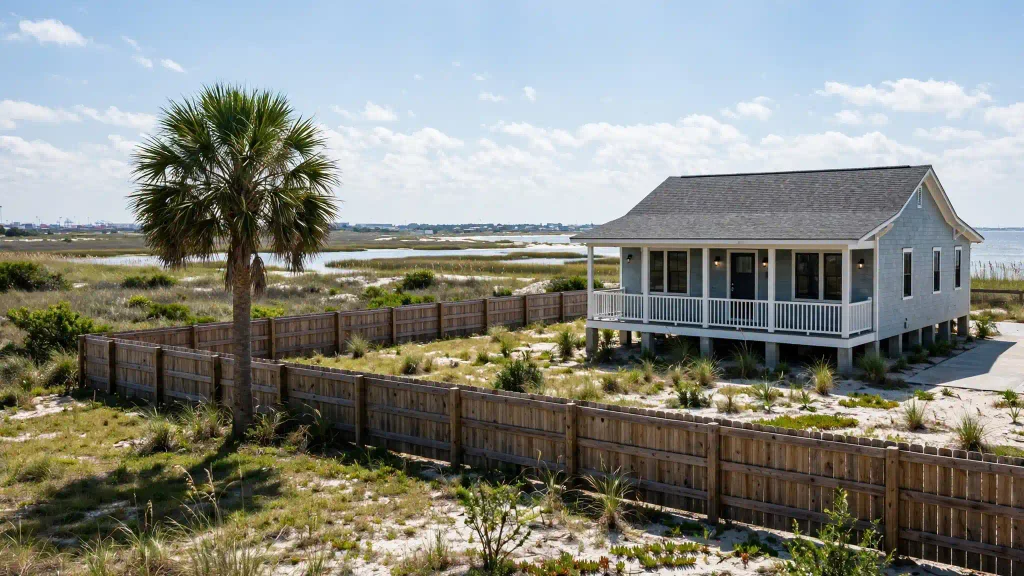
Texas City sits on the Gulf Coast, while Dallas, Fort Worth, Grand Prairie and Irving sit in North Texas. Together they show how much fence laws in Texas change from city to city. Confirm each rule with the city, because ordinances change.
| City | Front height | Rear height | Permit |
| Texas City | 4 feet for qualifying non-opaque fences; solid fences: 2.5 feet at the front line, with a sloped baseline rising to 6 feet at front-yard depth | 8 feet | Yes, for new, moved or height-changed fences. Survey stamped within 10 years required; no permits for vacant property. |
| Dallas | 4 feet | 9 feet (permit needed over 6 feet) | Yes: front yard over 4 feet, other areas over 6 feet. Exceeding zoning limits requires separate approval. |
| Fort Worth | 4 feet for open-design fences: at least 50% open; chain link prohibited in required front and projected front yards | 8 feet max behind the front building setback line | Yes, for solid fences over 7 feet and open fences over 8 feet; historic/floodplain approvals may apply. Front fences over 4 feet need separate zoning relief. |
| Grand Prairie | 3 feet | 8 feet | Yes, all fences |
| Irving | 4 feet, at least 50 percent open | 8 feet for homes, 10 feet for other uses | Yes, for any new or replacement fence; repairs generally require permits except qualifying minor maintenance. |
Before You Build: 5-Step Checklist
- Get a survey done and mark your property line.
- Look up the permit and setback rules for your address, since fence laws in Texas vary by city.
- Go through your HOA guidelines and deed restrictions.
- Settle costs and upkeep with your neighbor, and put it in writing.
- Call Texas811 before you break ground.
Fence Laws in Texas: Frequently Asked Questions
Homeowners ask the same few questions before they build, so here are quick answers.
Who Pays for The Fence Between Neighbors In Texas?
In Texas, there is no state law requiring neighbors to split the cost of a boundary fence. The person who decides to build or replace the fence is generally responsible for paying for it. However, you can always ask your neighbor to voluntarily share the expense. If they agree, make sure to put the details in a signed written agreement that spells out the cost breakdown and future repair responsibilities, and save your property survey and receipts.
What Are Texas Fence Height Laws?
Texas does not have a single statewide height limit for standard residential fences, leaving local cities and HOAs to set their own rules. In most Texas cities, backyard privacy fences can be up to 6 to 8 feet tall, while front yard fences are capped much lower-usually between 3 and 4 feet to keep sightlines clear. If your home sits on a corner lot, even lower limits often apply near intersections so drivers can clearly see traffic. Pool barriers also follow separate safety codes and generally require a minimum height of 48 inches (4 feet). Before starting your build, check your local city building office and HOA guidelines to verify the exact height limits for your specific address.
How Far Does The Fence Need To Be From the Street Or County Road In Texas?
Texas doesn’t have a statewide rule for how far a fence must sit from a street, sidewalk, or county road, meaning you have to check your specific city or county ordinances for exact distance requirements. You must always build entirely within your own property line and avoid placing anything on public land, including the grassy strip next to a sidewalk. Additionally, you need to keep corner visibility triangles clear so drivers can see cross traffic, and always check for utility easements before breaking ground so your fence doesn’t get ordered removed later.
Who Is Responsible For Fence Repair In Texas?
In Texas, you are generally responsible for maintaining and repairing your own fence. If the fence is on your property, you pay to fix or replace it when it gets damaged or wears down over time. If a neglected fence falls down and damages a neighbor’s property, the owner can be held liable for the cost. It is always a good idea to inspect your fence regularly, talk with your neighbor about shared boundaries, and take care of repairs early before small issues turn into bigger problems.
Understanding Border Fences
When people talk about border fences in Texas, they are usually referring to the federal barrier built under the Secure Fence Act of 2006. This large national project has nothing to do with private residential property lines. It does not change any rules, permits, or height limits for building or repairing your own backyard fence.
Do you Need a Permit To Build A Fence In Texas?
While Texas does not have a state-level permit for building a residential fence, many local cities require one depending on factors like your fence height, materials, and property location. Municipalities often mandate permits for fences over six feet tall or those located in designated zones like historic districts or flood zones, while properties outside city limits in unincorporated county areas generally follow different rules. Always check with your local city building department before buying materials to confirm whether a permit is necessary for your specific address.
Can I Remove My Neighbors Fence On My Property?
You should never tear down a neighbor’s fence yourself, even if you believe it is sitting on your property. Start by getting a professional survey to confirm the exact boundary line, but keep in mind that a survey alone does not give you the legal right to demolish or move the structure. Talk with your neighbor first and put your request in writing to resolve the issue amicably. If that fails, try mediation and consult a Texas real estate lawyer before taking any action, because rules regarding ownership and adverse possession can make removing it without permission a costly legal mistake.
The Role of Fence Repair Texas Fence Contractor in Ensuring Fence Law Compliance
Hiring a professional fence contractor like Fence Repair Texas takes the guesswork out of navigating local Texas city ordinances, permit rules, and HOA restrictions. They handle the essential groundwork, such as checking property lines, pulling required local permits, and ensuring your fence complies with specific height limits and safety codes. Relying on their local expertise helps you avoid costly mistakes, code violations, and the headache of having to tear down a non-compliant fence.
In a Nutshell
Fence laws in Texas leave many decisions to your city, HOA and property deed. Before building or replacing a fence, check your local requirements, confirm your property line and put any neighbor agreements in writing. A little preparation can save you from costly mistakes later.
If your existing fence needs attention or you’re planning a new installation, Fence Repair Texas can help. Call +1 (972) 525-9448 or request a free on-site estimate to discuss your project.