Free on-site estimatesServing Austin, Dallas, Houston, Fort Worth & San AntonioContact our fence specialists

Fence damage after a storm leaves you standing in the yard, wondering who to call first.. A fence company will tell you the repair cost, but only your insurance policy will tell you who pays for it. And that depends on two things: what took the fence down and what your policy says about that cause.
Fence damage from wind or a fallen tree may be covered.. One encounter from rot, age, or flooding usually isn’t. Knowing which side you’re on before you call – anyone can save their money:
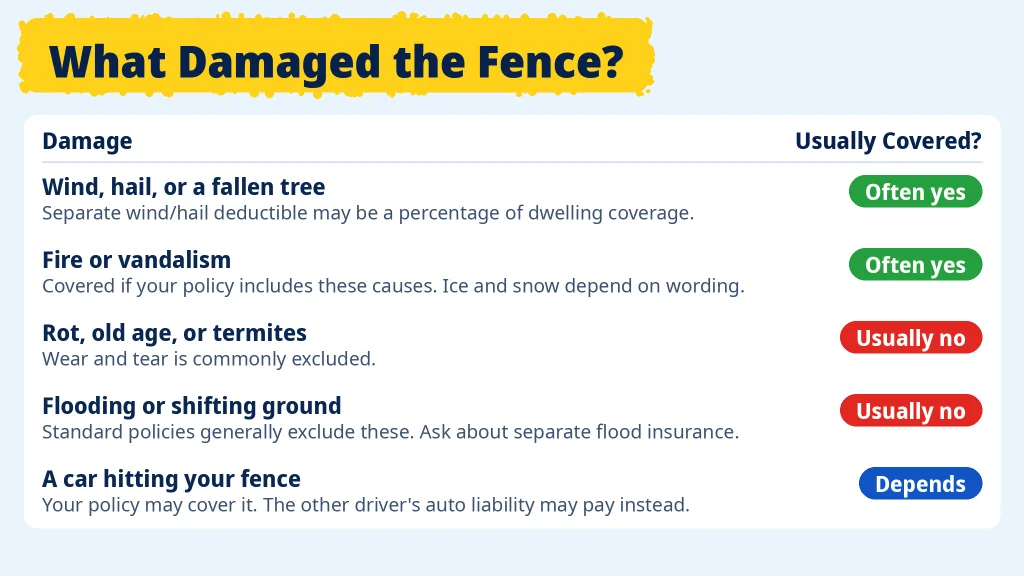
| What Damaged the Fence | Usually Covered? | What to Know |
| Wind, hail, or a fallen tree | Often yes | Check for a separate wind and hail deductible, which may be a percentage of your dwelling coverage. |
| Fire or vandalism | Often yes | Covered if your policy includes these causes. Ice and snow depend on your policy wording. |
| Rot, old age, or termites | Usually no | Wear and tear is commonly excluded, so you’ll likely pay for these repairs yourself. |
| Flooding or shifting ground | Usually no | Standard policies generally exclude these. Ask your agent about separate flood insurance. |
| A car hitting your fence | Depends | Your homeowners policy may cover it. If another driver is at fault, their auto liability insurance may pay instead. |
What Your Policy Says About Fence Damage
Before you call, you must have to see what you actually write in your insurance policy. It helps to find where fences show up in your written policy and who actually owns the fence that’s damaged.
Here are few methods to check so that you can easily save your budget:
Coverage B Explained
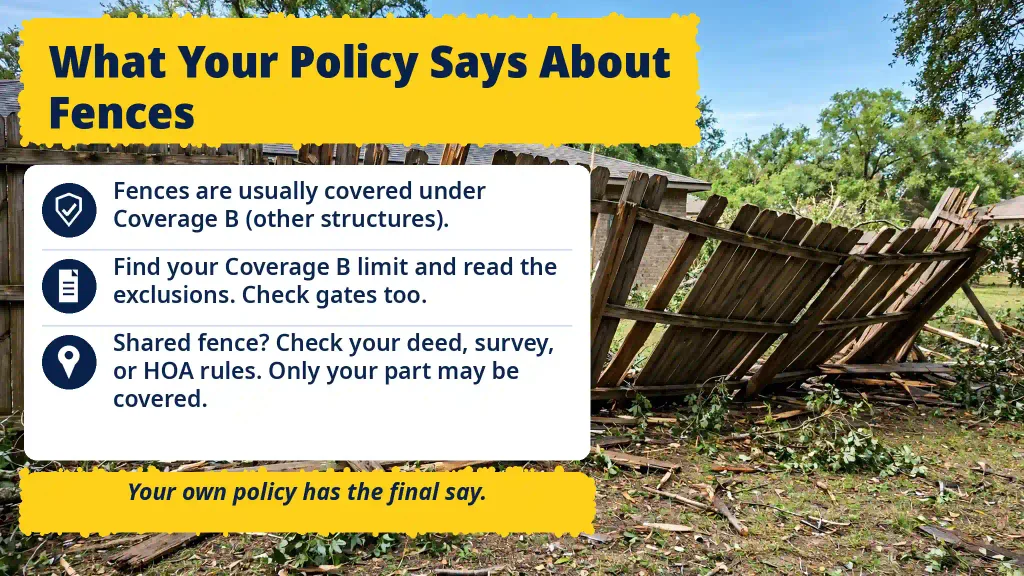
Fence damage is usually covered under Coverage B, also called “other structures.” This is the part of your policy for things on your property that aren’t attached to your house, like fences, sheds, and detached garages.
The Texas Department of Insurance explains how this coverage works, but your own policy has the final say, so find your Coverage B limit and read the exclusions. Check whether gates are included too, because they sometimes get overlooked.
Who Owns the Fence?
If you share a fence with a neighbor, figure out who owns it before you file. Your deed, your property survey, or your HOA rules can usually settle that. If you only own part of it, don’t be surprised if your claim only covers your part.
How Storms Lead to Fence Damage
Usually storms cause the vast majority of fence claims. In the end, whether insurance pays for your repairs depends entirely on what caused the fence damage..
Wind, Hail and Fallen Trees
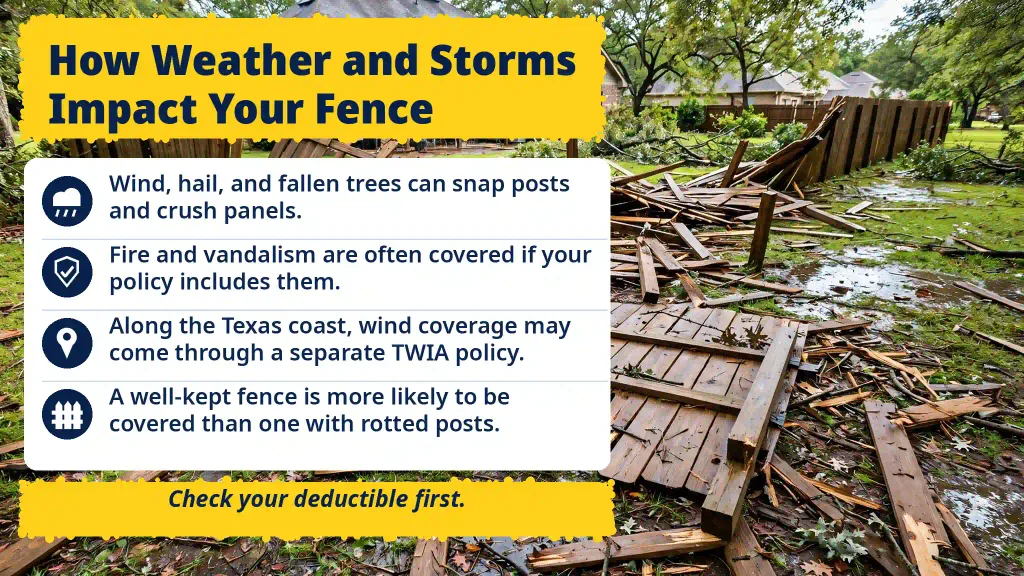
Strong winds can snap posts, tear off panels, or knock down an entire fence section. Hail can crack wood, dent metal, or damage vinyl. A falling tree or large branch can also crush panels or damage a gate. These types of fence damage may be covered
Cause of damage
Some Texas policies have a separate deductible for wind and hail, and tree removal may be handled differently from fence repairs. Along the Texas coast, wind coverage may also come through a separate Texas Windstorm Insurance Association (TWIA) policy.
Fire, Vandalism, and Other Weather Events
Fire and vandalism are often covered if your policy includes them, while ice, snow, and similar events depend on how your policy is worded. Don’t assume something is covered just because it happened suddenly, because your insurer will look at what happened first.
Other factors that affect your storm claim:
Cause of damage: Wind, hail, and falling trees may be covered if your policy includes that cause.
Separate deductible: Some Texas policies have a different deductible for wind and hail, sometimes a percentage of your dwelling coverage.
Tree removal: Removing a fallen tree may be handled differently from repairing the fence.
Coastal coverage: Along the Texas coast, wind coverage may come through a separate TWIA policy.
Policy wording: Ice, snow, and similar events depend on how your policy is worded.
Fence condition: A storm that knocks down a well-kept fence is more likely to be covered than one that takes down a fence with rotted posts.
What Isn’t Covered
Not every case of fence damage makes for a good claim, especially when the problem built up slowly or comes from something your policy excludes.
Rot, Age, and Pests
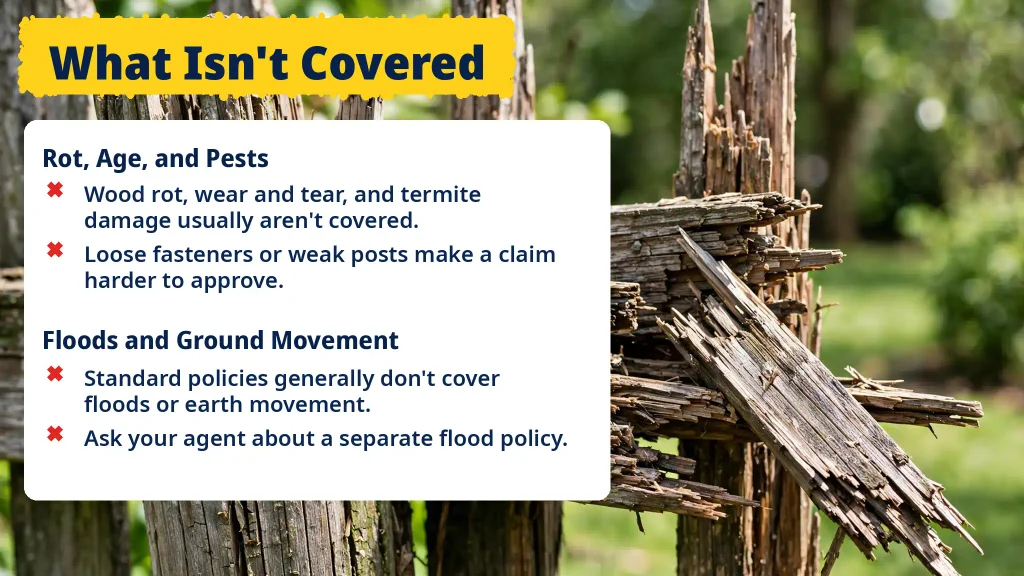
Fence damage from wood rot, normal wear and tear, or termites usually isn’t covered. Loose fasteners or weak posts can also make a claim harder to approve. Here’s the difference: if a storm knocks down a fence that was in good condition, you may have a valid claim. But if an old fence falls because its posts have rotted at the base, you’ll likely have to pay for the repairs yourself.
Floods and Ground Movement
Standard homeowners policies generally don’t cover floods, and earth movement is usually excluded as well. If flooding is a worry where you live, ask your agent about a separate flood policy, and whether it would cover a fence at all.
How Your Deductible Works
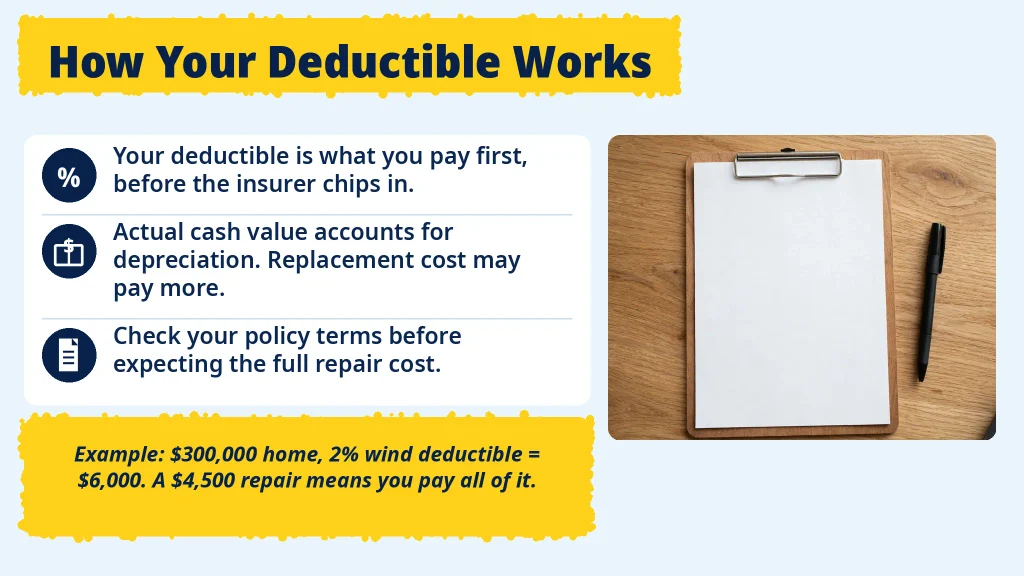
Even when the fence damage is covered your deductible and the way your insurer calculates a payout can shrink the check or erase it completely.
Percentage Deductibles
Your deductible is what you pay yourself before the insurance company chips in. Some Texas policies don’t use a flat dollar amount for wind and hail. They use a percentage of your home’s dwelling coverage instead. Say your dwelling coverage is $300,000 and your wind deductible is 2%. That’s $6,000, so if your fence repair costs $4,500, you’d pay for all of it, even though the damage is covered.
How Your Payout Is Calculated
Your payout also depends on how your policy values the fence. Actual cash value accounts for depreciation, so you may get less for an older fence. Replacement-cost coverage works differently and may pay more toward replacing it. Check your policy terms before expecting insurance to cover the full repair cost.
How to File a Fence Claim
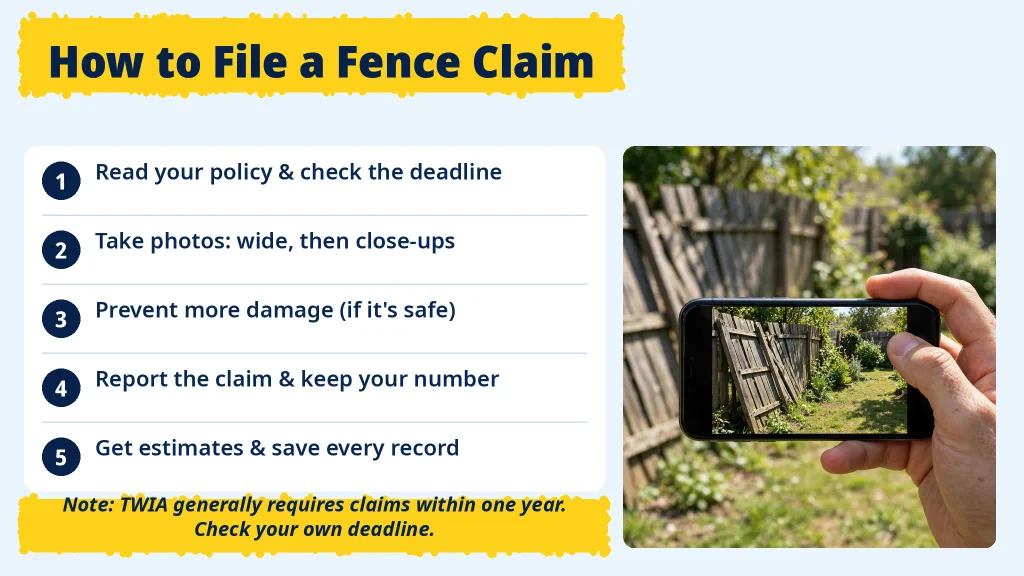
Once you’ve checked your coverage, these five steps will help you file without running into delays.
Step 1: Read Your Policy
Check which causes your policy covers, what it excludes, your deductible, and the deadline for filing a claim. These deadlines vary by insurer. For example, TWIA generally requires claims to be reported within one year of the loss. However, that deadline doesn’t apply to every homeowners policy, so check the rules for yours.
Step 2: Photograph the Fence Damage
Start wide and get the whole fence line in the shot. Then move in close on broken panels, posts, rails, and gates, and don’t forget nearby damage like a fallen branch. Keep the original photo files, and write down when the damage happened or when you first spotted it. If you have older photos of the fence from before the damage, save those too.
Step 3: Prevent More Damage
If it’s safe, do what you reasonably can to prevent more damage. Keep people and pets away from shaky sections, stay far away from downed power lines, and don’t take risks trying to save the fence. Keep receipts for any emergency work or materials, and ask your insurer whether they want to inspect before you make permanent repairs.
Step 4: Report the Claim
Call your insurer, tell them what happened, and send your photos and notes. Ask whether an adjuster needs to look at the fence before repairs begin, and hang on to your claim number and keep everything in writing.
It also helps to know your rights here. Under Texas Insurance Code Section 542.055, insurers generally have to acknowledge your claim, start investigating, and request whatever information they need within 15 days of getting your notice. Some surplus-lines insurers follow different timelines, and certain catastrophe-related deadlines can be extended.
Step 5: Get Estimates and Save Records
Get an itemized estimate for the repairs or replacement, and keep all estimates, invoices, receipts, and emails. If your contractor’s estimate differs from the insurer’s, ask them to explain why. Also, check whether the insurer needs to inspect or keep any damaged materials, as long as it’s safe to do so. Never sign a settlement or repair agreement you don’t fully understand.
Should You File a Claim?
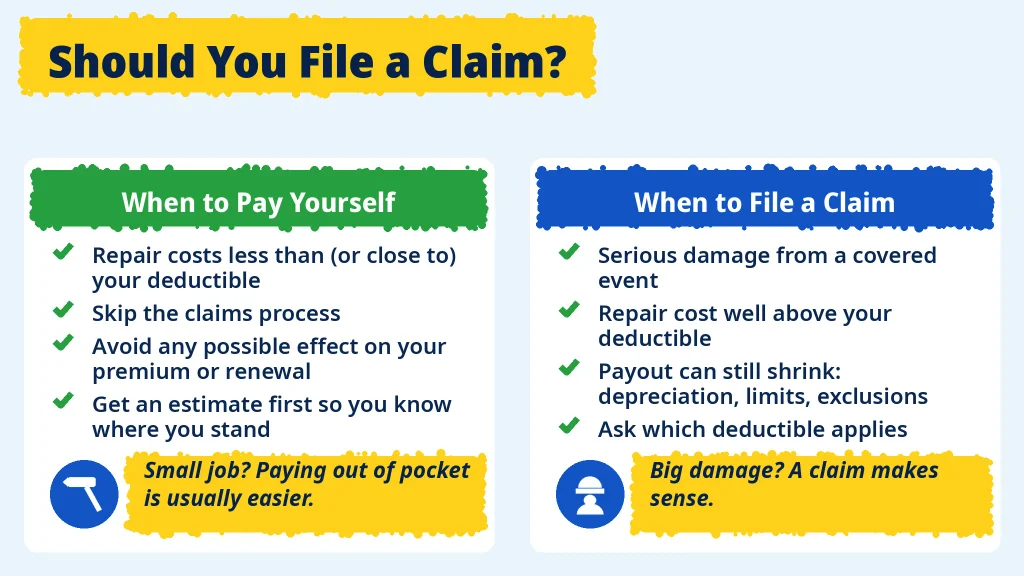
once you know how bad the fence damage is and what your policy says, put two numbers side by side: what insurance might pay and what the repair would cost you directly.
When to Pay Yourself
If the repair costs less than your deductible, or close to it, paying out of pocket is usually easier. You skip the claims process and avoid any possible effect on your premium or renewal. For small jobs, get an estimate first so you know where you stand.
When to File a Claim
A claim makes sense when a covered event caused serious fence damage and the repair cost is well above your deductible. Just know the final payout can still shrink because of depreciation, coverage limits, exclusions, or how the insurer sees the damage. Before you file, ask which deductible applies, whether the cause is covered, what proof they need, and how they’ll work out your payment.
Two Special Cases
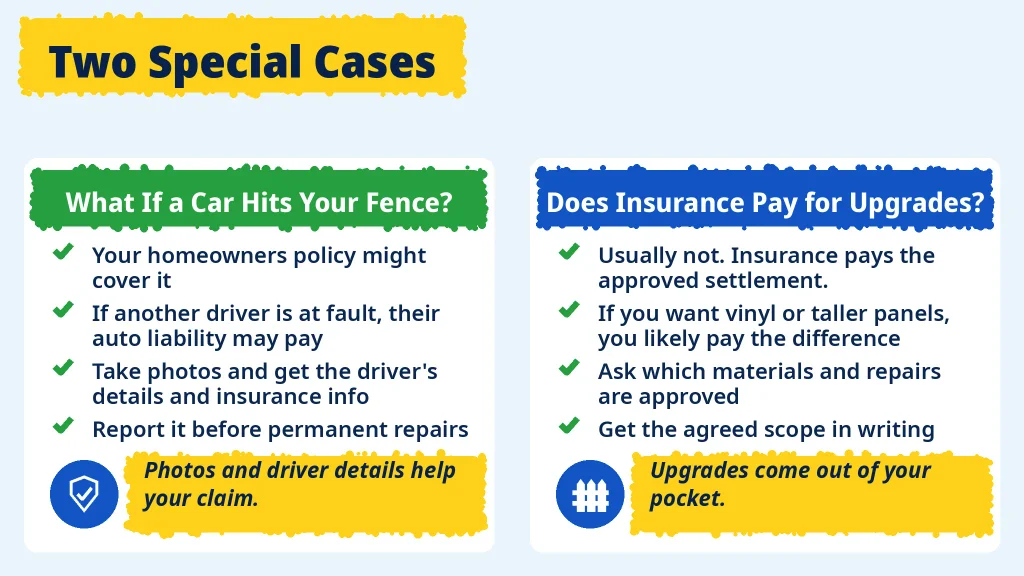
Some fence problems don’t fit the usual storm scenario, so it’s worth knowing how they’re handled before you decide who should pay.
What If a Car Hits Your Fence?
Your homeowners policy might cover it, depending on its terms. If another driver hit your fence, their auto liability insurance may pay instead, so take photos, write down the driver’s details, and get their insurance information. Then report it to the right insurer and ask what to do next before you arrange permanent repairs.
Does Insurance Pay for Upgrades?
Usually not because Insurance pays based on your coverage and the approved settlement, not on what you’d like to build. If your wood fence needs replacing and you’d rather have vinyl or taller panels, you’ll likely pay the difference. Ask which materials and repairs are approved before work begins, and get the agreed scope in writing.
In a Nutshell
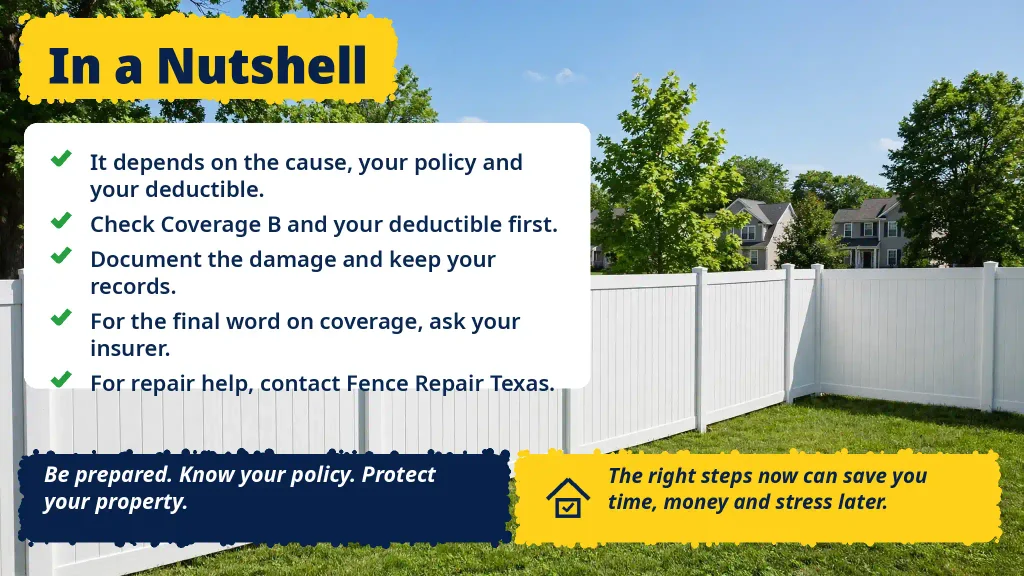
Homeowners insurance can cover fence damage in Texas, but it depends on the cause, your policy and your deductible. If you want help sorting out your fence damage and repair options, contact Fence Repair Texas and for the final word on what your policy covers, ask your insurer.