Free on-site estimatesServing Austin, Dallas, Houston, Fort Worth & San AntonioContact our fence specialists

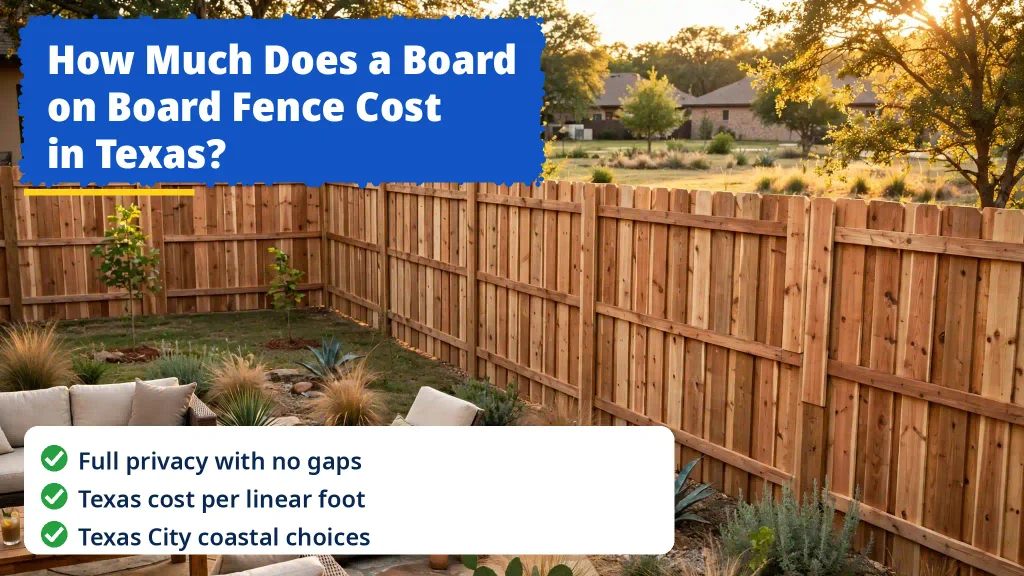
Board on board fence cost in Texas typically ranges from $25 to $68 per linear foot installed for pine, cedar, and composite, putting a 100-foot fence at about $2,500 to $6,800 before gates, old fence removal, or staining. Your final price depends on wood type, fence height, yard slope, labor, and local conditions. In Texas City, salt air, humidity, and hurricane winds make durable fasteners and regular sealing important.
Cost at a Glance
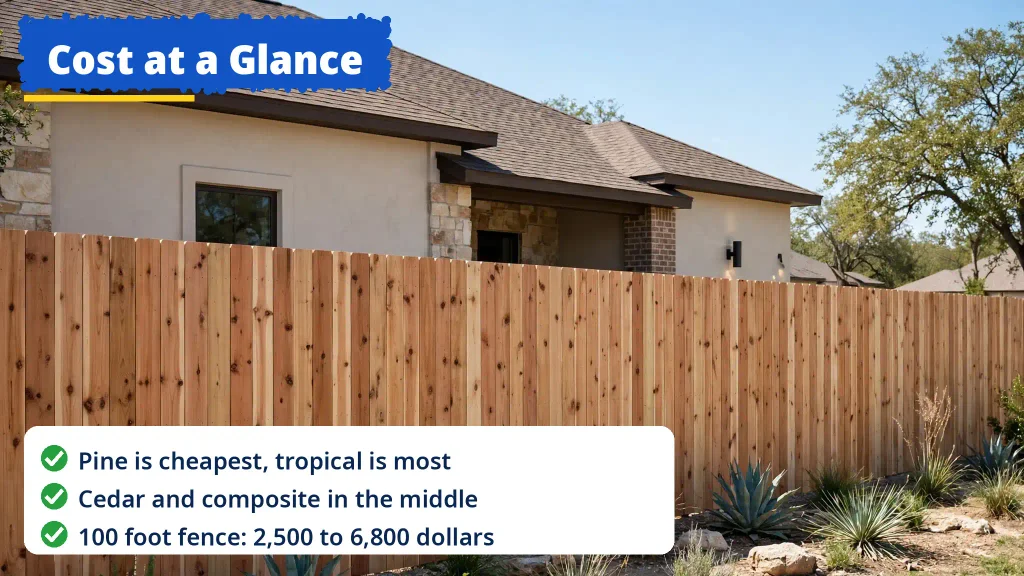
Board on board fence cost is lowest with pine and highest with tropical hardwood, with cedar and composite sitting somewhere in the middle. The table below shows installed prices for a standard 6 foot fence.
| Type | Installed cost per linear foot | Typical 100 foot total |
| Pressure treated pine | 25 to 38 dollars | 2,500 to 3,800 dollars |
| Cedar | 32 to 48 dollars | 3,200 to 4,800 dollars |
| Composite | 48 to 68 dollars | 4,800 to 6,800 dollars |
| Redwood | 55 to 78 dollars | 5,500 to 7,800 dollars |
| Tropical hardwood | 68 to 95 dollars | 6,800 to 9,500 dollars |
You’ll land near the low end if you pick pine for a short, flat run with no gate and no old fence to haul away. Premium wood, a sloped yard, gates, and stain are what push you toward the high end.
What Is a Board on Board Fence?
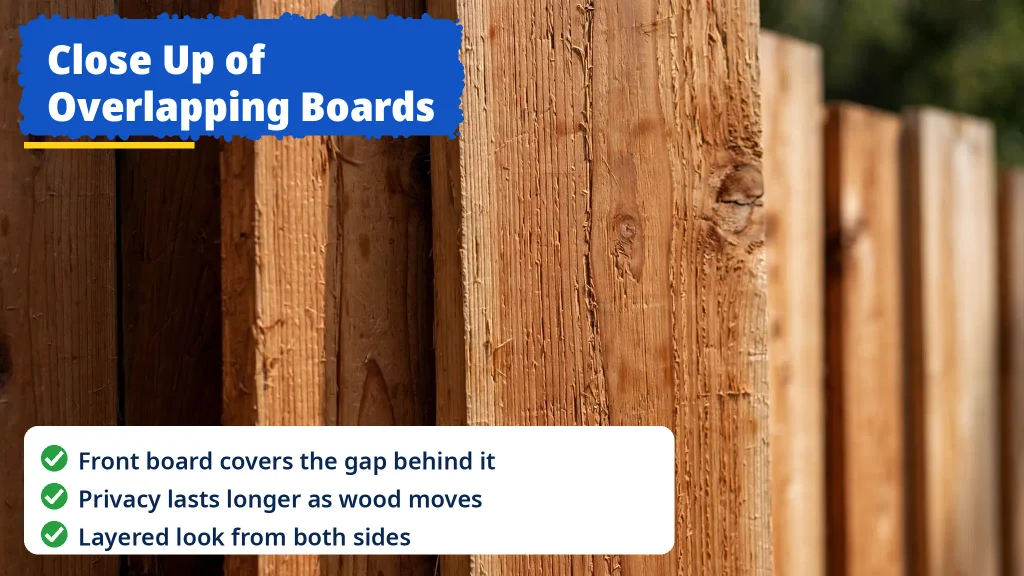
A board on board fence is a wood privacy fence made from overlapping upright boards. One board goes on the front of the rail, the next sits behind it, and the front board covers the gap between the two boards at the back. Below we look at why that overlap matters, how this style stacks up against others, and what a standard build includes, since all three shape board on board fence cost.
How the Overlap Works
The overlap keeps your fence private even when the wood moves. On a standard privacy fence the boards sit side by side, so gaps open up as the wood dries, shrinks, or warps in Texas heat. With the board on board, the front board still covers the joint when a back board shifts, so privacy lasts longer and the fence looks layered from both sides.
Board on Board vs Other Privacy Fences
Of the three common wood styles, board on board gives the most privacy, and board on board fence cost is the highest of the three too.. A standard privacy fence is cheaper because it needs fewer boards and less labor, but gaps can show up over time. A shadowbox fence puts boards on alternating sides of the rail, which looks good from both directions and lets air pass through, though it isn’t fully private.
Standard Parts and Sizes
Most board on board fences use 6 inch wide boards, horizontal rails, and 4 inch by 4 inch posts, with post caps as an option. Six feet is the most common height, and it suits most yards and HOA rules. Some homeowners go up to 8 feet for extra privacy, but that raises your board on board fence cost and gives the wind more to push against.
Board on Board Fence Cost Per Foot in Texas
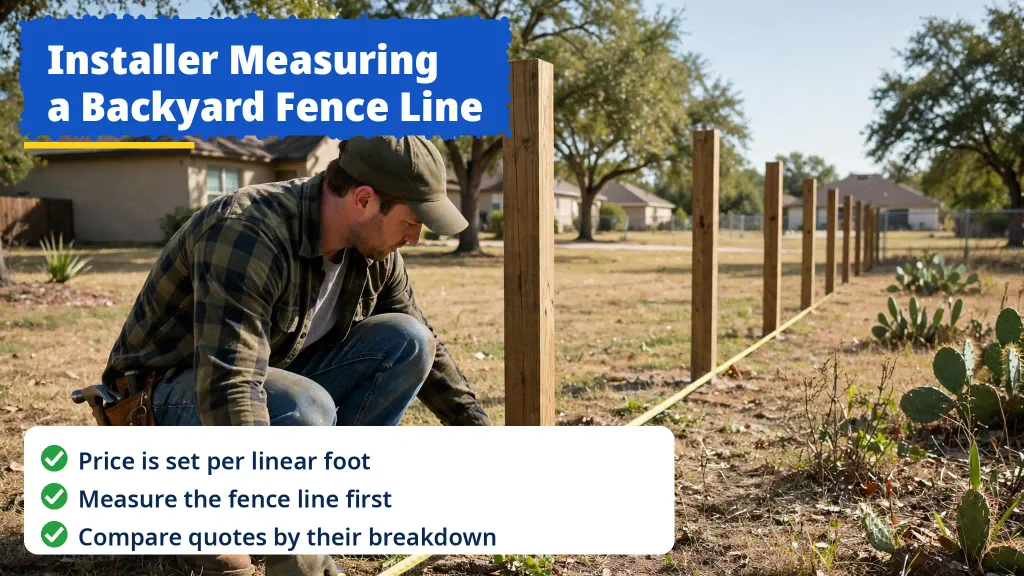
Fence prices are quoted per linear foot, which just means per foot of fence line. The sections below break that number down by price, length, real examples, and the reason national guides don’t match Texas prices.
Price Per Linear Foot
Board on board fence cost for a standard 6 foot fence on flat ground is 25 to 38 dollars per foot for pine, 32 to 48 dollars for cedar, and 48 to 68 dollars for composite, installed, based on Texas market guides. An installed price should cover boards, posts, rails, fasteners, post concrete, and labor. Labor climbs with slope, hard ground, and tight access, so two fences of the same length can get very different quotes, and a quote that shows only one total is hard to compare with anything.
Total Cost by Fence Length
Length drives board on board fence cost more than anything else, since every extra foot needs more boards, rails, posts, and time. The table uses cedar at 32 to 48 dollars per foot for a standard 6 foot fence on flat ground, with no gate, removal, or stain. Pine costs less and premium woods cost more, while gates and stain are always extra.
| Fence length | Cedar total, installed |
| 50 feet | 1,600 to 2,400 dollars |
| 100 feet | 3,200 to 4,800 dollars |
| 150 feet | 4,800 to 7,200 dollars |
| 200 feet | 6,400 to 9,600 dollars |
Worked Cost Examples
Two quick examples show how extras change your board on board fence cost. Say you build a flat 100 foot cedar fence, 6 feet high, with no old fence to remove. That runs 3,200 to 4,800 dollars, and one walk gate adds 250 to 650 dollars, which brings you to 3,450 to 5,450 dollars before stain.
Now picture a 150 foot pine fence on a gently sloped yard, which costs 3,750 to 5,700 dollars. Tearing out the old fence at 3 to 8 dollars per foot adds another 450 to 1,200 dollars, so you end up at 4,200 to 6,900 dollars before gates and stain.
Why National Price Guides Differ
National guides give you one wide range because they blend cheap and premium woods, small and large yards, and low and high labor markets into a single number. Texas often sits in the middle to upper part of that range, since metro labor here isn’t the cheapest in the country. So the Texas figures in this guide are a better starting point for estimating board on board fence cost in your yard.
Cost by Wood Type
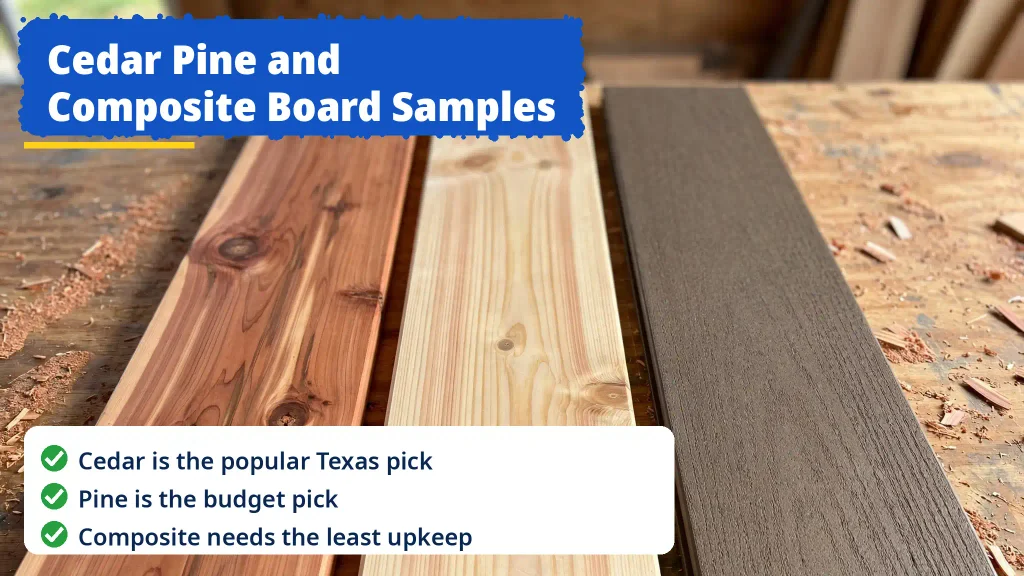
Pressure treated pine is the cheapest wood at 25 to 38 dollars per foot, and tropical hardwood costs the most at 68 to 95 dollars. Apart from fence length, wood choice moves your board on board fence cost more than anything else. The table compares all five options, and the sections after it cover each one.
| Wood | Installed cost per linear foot | Typical lifespan with care | Maintenance level |
| Pressure treated pine | 25 to 38 dollars | 15 to 20 years | Medium to high |
| Cedar | 32 to 48 dollars | 15 to 25 years | Medium |
| Composite | 48 to 68 dollars | 25 to 30 years or more | Low |
| Redwood | 55 to 78 dollars | 20 to 30 years | Medium |
| Tropical hardwood | 68 to 95 dollars | 25 to 40 years | Low to medium |
Cedar
Cedar is the most popular board on board wood in Texas. It fights rot and insects better than untreated wood, handles the heat well when sealed, and fades to a warm gray if you leave it unstained. A bit of cleaning and resealing keeps it looking good, but skip the sealing in a humid yard and you can end up with splitting and rot right at the soil line.
Pressure Treated Pine
Pressure treated pine is the budget pick, and a practical one for plenty of Texas yards. The treatment protects against rot and insects, and pine takes stain well. Watch the soil line though, because pine soaks up water faster than cedar does, so keep soil, mulch, and sprinklers away from the boards.
Redwood
Redwood is a premium wood with rich color and smooth, even grain. It resists rot and insects on its own, warps less than many other woods, and lasts well with good care. The downside is the price, and if budget comes first, cedar is the better value.
Tropical Hardwood
Tropical hardwood, like ipe, is the strongest and longest lasting wood in this guide, and it stands up to rot, insects, and wear because it’s so dense. That same density makes it heavy and hard to cut, and it costs the most per foot. It also needs the right fasteners and finish to do its job.
Composite
Composite isn’t solid wood, but many homeowners put it next to wood board on board fences anyway. The boards are made from wood fibers and plastic, so they look like wood and need the least upkeep, since they don’t rot or need staining. You pay more upfront, and dark boards can get hot in direct Texas sun.
Which Wood Fits Which Goal
Pick the wood that matches your main goal. If budget comes first, go with pressure treated pine and spend the savings on good posts, fasteners, and sealing. Cedar gives the best balance of price, looks, and lifespan, while tropical hardwood is the choice for the longest life and the richest look. And if you just want the lowest upkeep, composite is the one.
Why Board on Board Fences Cost More
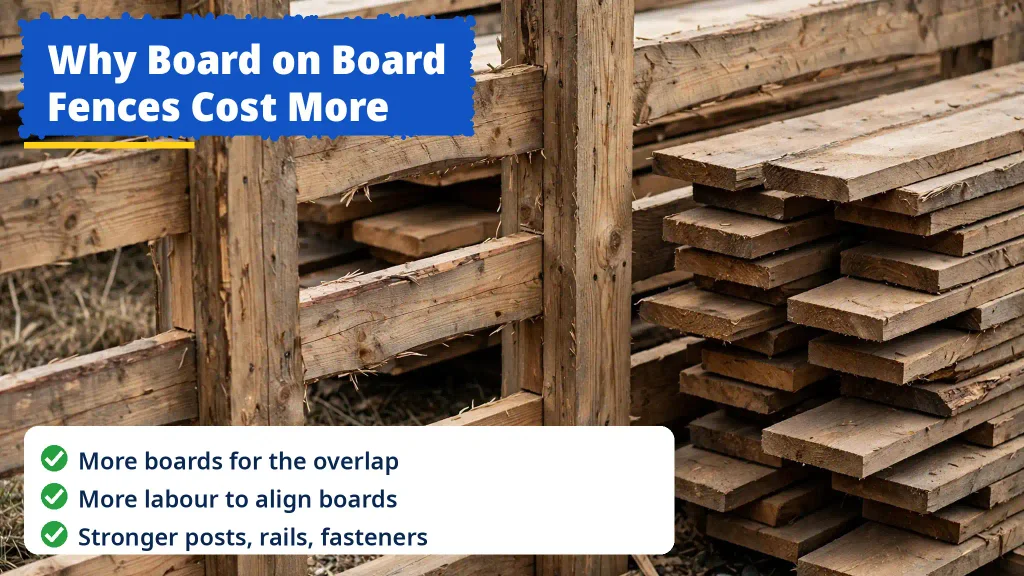
A board on board fence costs about 25 to 35 percent more than a similar standard wood privacy fence. Three things create that gap: more boards, more labor, and a stronger frame.
Extra Boards and Overlap Math
Board on board uses about a quarter to a third more boards than a standard privacy fence of the same length. Each front board covers the gap behind it, and that overlap is what gives you full privacy.
Extra Labor
Every board has to go up in the right order, with the overlap kept even from one end to the other. That takes more time and skill than fixing boards side by side, and mistakes show up fast in this style. Setting the posts accurately keeps the whole run neat.
Stronger Posts, Rails, and Fasteners
A solid fence is heavy and catches more wind, so the frame has to be stronger to hold it. Posts usually go in closer together and rails carry more weight, while the fasteners need to hold through heat, rain, and wind without rusting out early.
What Else Changes Your Board on Board Fence Cost
Wood and length set the base board on board fence cost, but a few other things can move your final quote. The sections below cover the site, the rules and paperwork, and the add-ons that sit on top of the fence itself.
Fence Height and Total Length
An 8 foot fence costs more per foot than a 6 foot fence, since it needs taller posts, longer boards, and stronger rails. Total cost rises in a straight line with length, but short runs can cost more per foot because travel and setup costs get spread over fewer feet.
Slope, Ground, and Access
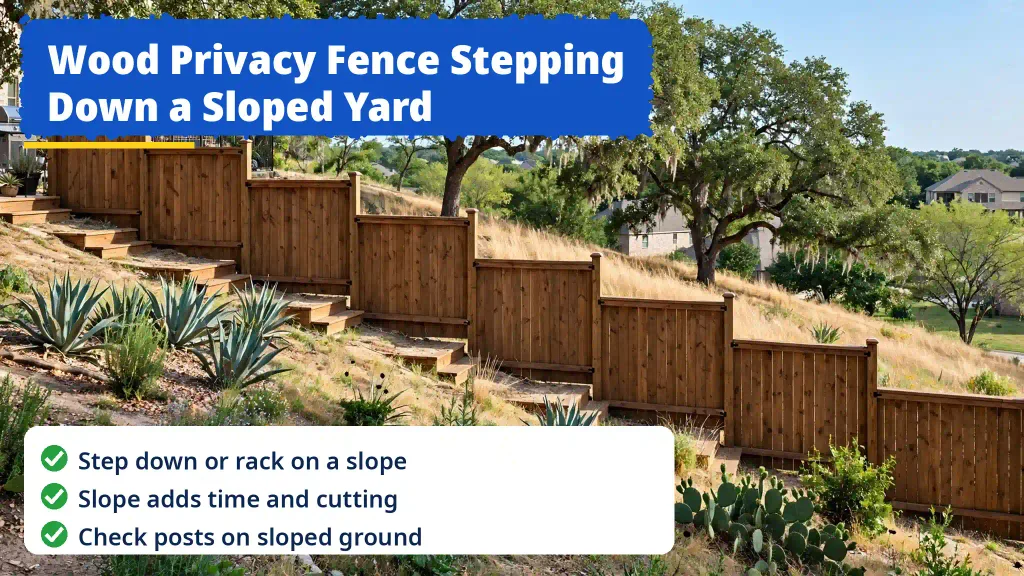
A flat yard is the cheapest to fence. On a slope the fence has to step down or follow the ground, and that means more time and more cutting. Inland clay soil swells when wet and shrinks when dry, which can push shallow posts out of line, while soft wet ground near the coast can make post holes collapse. Tight access, trees, roots, and old concrete footings add labor too.
Old Fence Removal and Disposal
Removal costs 3 to 8 dollars per linear foot, depending on the fence type and how the old posts were set. For a 100 foot fence, that’s 300 to 800 dollars. Ask whether removal and disposal are in your quote, because some contractors leave disposal out.
Permits, HOA Rules, and Property Lines
Many Texas cities want a permit for a new fence, and many HOAs have rules on height, style, color, and placement. Fees and rules change by city and neighborhood, so this guide doesn’t list a single Texas City permit fee. Check with your city and HOA before work starts, ask whether the permit is in the price, and confirm your property line before anyone digs.
Gates, Post Caps, Trim, and Decorative Features
A standard walk gate usually adds 250 to 650 dollars, with the frame and hardware included. A double drive gate is wider and heavier, so it typically adds 900 to 1,800 dollars. Post caps, top cap rails, and trim cost less, and they’re priced per post or per foot, but they give the fence a nicer finish and protect the board tops.
Staining and Sealing
A professional stain and seal for a typical Texas yard often runs 1,200 to 2,000 dollars, depending on length, height, and whether both sides get finished. Doing it yourself saves the labor, and materials often cost 200 to 500 dollars, but the coat has to go on evenly to protect the wood. Plan to recoat every few years.
Underground Utilities, Drainage, and Sprinklers
Call 811 in Texas before you dig any post hole, so public underground utilities get marked Private lines, like sprinkler lines, are your job to mark. A fence sitting in standing water rots faster at the base, so the ground should drain away from the posts and sprinkler heads should point away from the boards.
Repair or Replace a Board on Board Fence
You don’t always need to replace the whole fence when one part fails. Single boards, rails, and posts can often be swapped out while the rest of the frame is still sound, and our fence repair cost guide] covers typical repair prices. Replacement becomes the better value when damage keeps showing up along a long section or when many posts have failed.
Texas City and Gulf Coast Fence Conditions
Texas City sits on Galveston Bay, so a fence there deals with different problems than one inland, where clay soil and slope matter more. The sections below cover moisture, storm wind, the best materials, and upkeep.
Salt Air and Humidity
Salt air and humidity keep wood damp longer, and damp wood is where rot starts. The soil line is the danger zone, since boards and posts stay wet after rain and watering. Cheap, uncoated, so corrosion resistant fasteners are worth the extra money, even though they add to your board on board fence cost.
Hurricane Season Wind Load
Hurricane season runs from June through November and a Texas City fence has to handle strong wind and heavy rain. A solid board on board fence catches more wind than a picket or shadowbox fence, because the wind can’t pass through it. Set the posts deep in sound concrete footings and use rails strong enough to carry the boards without bowing. After a storm, walk the fence line and look for leaning posts and loose boards.
Best Wood, Fastener, and Finish Choices for the Coast
Cedar is usually the best solid wood for the coast. It balances price, looks, and rot resistance, as long as it’s sealed and fitted with corrosion resistant fasteners. Pressure treated pine can work too, but it needs more careful sealing and more frequent checks at the base. Composite skips the rot problem altogether, and tropical hardwood lasts longest at the highest price.
Gulf Coast Maintenance Schedule
A fence on the Gulf Coast needs more attention than one inland, and there’s no way around that. Clean it once or twice a year, look it over after every big storm, and reseal it every two to three years instead of the three to five you’d get away with inland. Fix loose boards early, before they turn into bigger jobs. When you talk to a contractor, ask about coastal fasteners, how deep the posts go, what footings they use for wet ground, and how they plan to seal against salt air.
How to Lower Your Board on Board Fence Cost
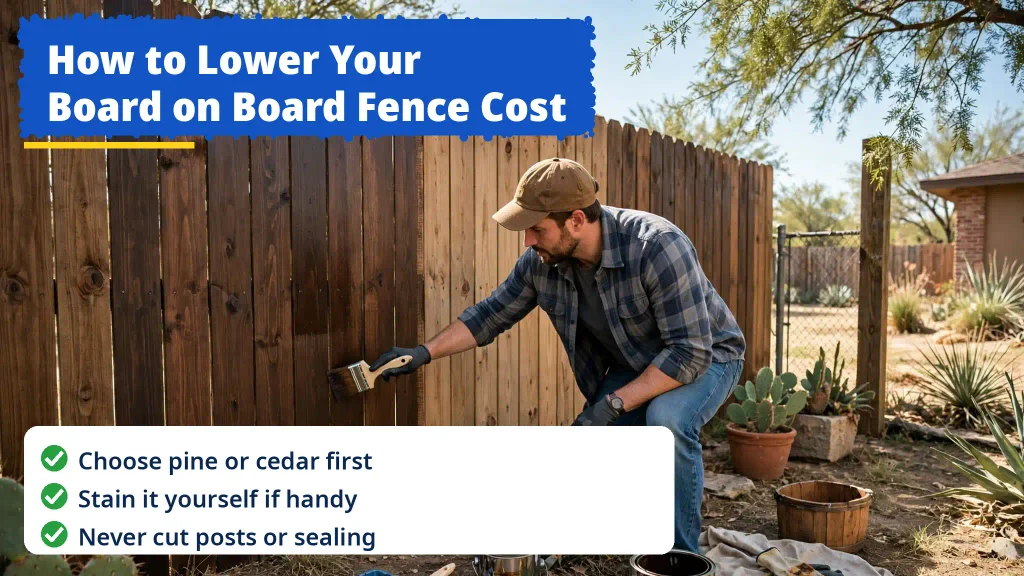
You can bring the price down without making the fence wear out sooner. Go with pine or cedar and spend what you save on good posts, fasteners, and sealing. If you’re handy, stain it yourself. A smaller fenced area helps too, and so does a simple design with a standard height and fewer gates.
Get a few written quotes and read them line by line, because that’s where the differences show up. Ask if off season work is cheaper and whether bundling removal with the new build saves anything. Just don’t trim post depth, footings, fasteners, or sealing to save a few bucks. That’s the money you end up paying twice.
DIY vs Hiring a Pro
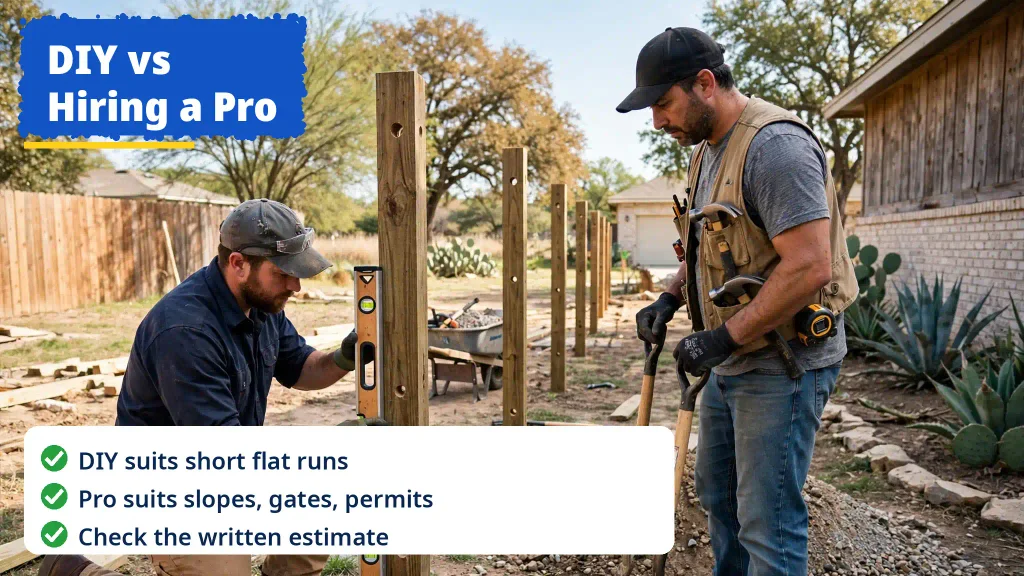
DIY can cut your board on board fence cost on a short, flat, simple run, as long as you have the tools and know how to set posts level and in line. It’s slow work, though, and concrete takes as long as it takes to set. Once you’re dealing with a long run, a slope, gates, permits, utilities, or Gulf Coast wind and soil, hiring a pro is the safer move.
A good crew gives you a written estimate, a neater finish, and often a warranty. Check that the quote lists length, height, wood, post size and spacing, fasteners, footings, and removal. Permits, gates, stain or seal, timing, and warranty terms should be in there too.
Is a Board on Board Fence Worth the Extra Money?
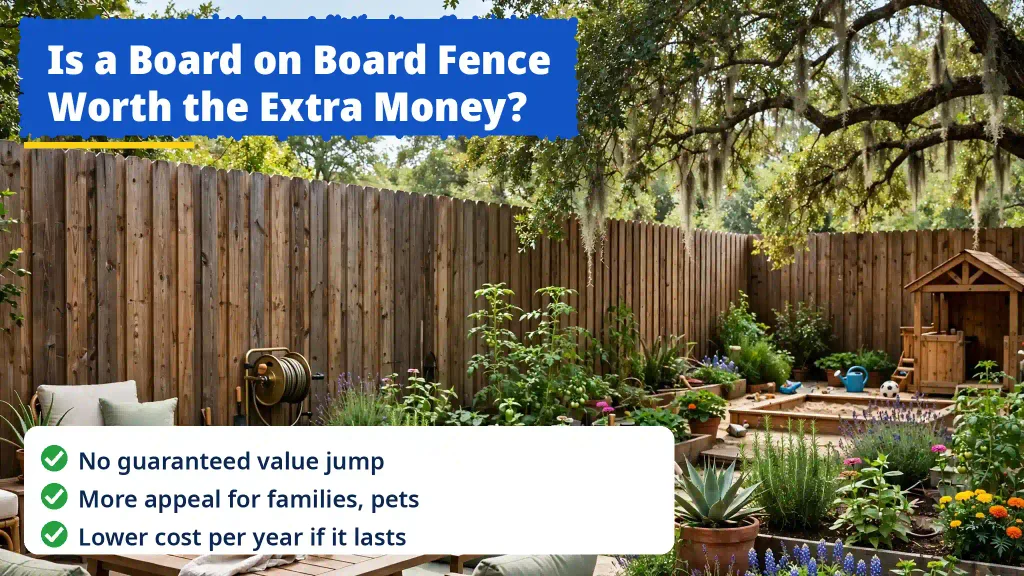
Sometimes, yes. A fence on its own won’t move your home’s appraised value much, and nobody can honestly promise you a set bump. What it does do is make the house more appealing to buyers, especially families with kids or pets who want a yard that’s fully private.
Think about the long run too. A well built, well sealed fence that lasts 20 years or more can cost less per year than a cheaper one you replace early. So set your board on board fence cost next to how long you plan to stay and how much privacy you actually need. The answer is usually pretty clear after that.
Frequenlty Asked Questions
Which wood is best for a fence in Texas City?
Cedar is usually the best fit, since it balances price, looks, and rot resistance. Seal it often and use corrosion resistant fasteners to handle the salt air and humidity. Pine costs less but needs closer care at the soil line, and composite skips the rot problem for a higher price.
How long does a board on a board fence last?
With good care, pine lasts 15 to 20 years and cedar lasts 15 to 25. Redwood runs 20 to 30 years, and tropical hardwood can reach 25 to 40. Composition usually goes 25 to 30 years or more. Cleaning, sealing, and quick repairs help any wood fence last longer.
Do I need a permit for a fence in Texas City?
Many Texas cities require one for a new fence, so check with the city before you build. Fees and rules vary, and this guide can’t give you the exact Texas City fee. Look at your HOA rules on height, style, and color too, and confirm your property line first.
Can I replace single boards instead of the whole fence?
Yes, often you can swap out single boards, rails, and posts if the rest of the frame is sound. Make sure the posts are firm and not rotted at the base, and ask for a repair quote first. Full replacement makes more sense when the damage keeps showing up along a long section or many posts have failed.
In a Nutshell
Board on board fence cost in Texas starts near 25 dollars per foot and climbs with premium wood, slope, gates, and stain. Cedar suits most yards, and in Texas City the fasteners, footings, and regular sealing matter most. Not sure what it will cost for your yard? Fence Repair Texas will measure it and give you a free estimate. Call (972) 525-9448.